The Rise of Personal AI: Digital Twin Revolution
The Rise of Personal AI is transforming how we interact with technology, offering a future where everyone has a digital twin a virtual counterpart that learns, predicts, and acts on their behalf. This evolution is driven by advancements in artificial intelligence (AI), machine learning, and big data, enabling AI systems to mirror human behavior with unprecedented accuracy (Kurzweil, 2020). As the Rise of Personal AI accelerates, digital twins are poised to revolutionize industries, from healthcare to finance, and redefine personal productivity (Davenport & Ronanki, 2018).
Understanding Digital Twins and Personal AI
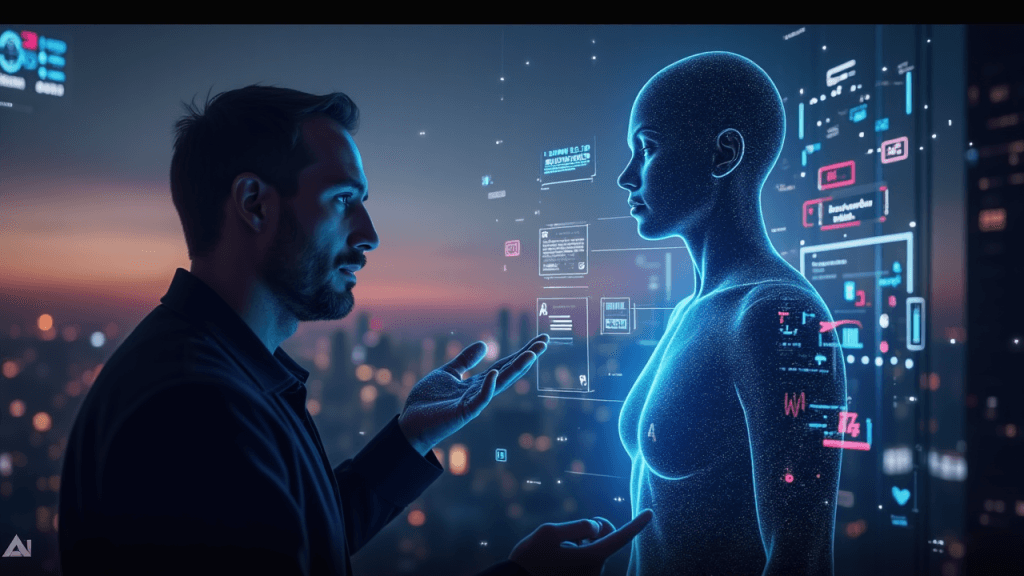
A digital twin is a dynamic, AI-powered replica of a person, capable of simulating their decisions, preferences, and interactions (Grieves, 2016). The Rise of Personal AI has made this concept more accessible, allowing individuals to create AI-driven versions of themselves for various applications. These digital twins can manage schedules, respond to emails, and even engage in conversations, mimicking their human counterparts with startling precision (Sicular et al., 2021).
The foundation of this technology lies in deep learning algorithms that analyze vast amounts of personal data, including communication patterns, browsing history, and social media activity (Ng, 2020). As the Rise of Personal AI continues, these systems will become more sophisticated, enabling digital twins to anticipate needs and make autonomous decisions (Brynjolfsson & McAfee, 2017).
The Impact of Personal AI on Daily Life
The Rise of Personal AI is already reshaping everyday experiences. Virtual assistants like Siri and Alexa were early iterations, but digital twins take personalization to a new level. Imagine an AI that drafts emails in your writing style, attends virtual meetings on your behalf, or even negotiates deals based on your past behavior (Manyika et al., 2021).
In healthcare, digital twins can monitor vital signs, predict potential health risks, and recommend personalized treatment plans (Topol, 2019). The Rise of Personal AI in this sector could lead to earlier disease detection and more efficient care, reducing the burden on medical professionals.
Similarly, in finance, AI-driven digital twins can optimize investments, manage budgets, and detect fraudulent transactions in real time (Agrawal et al., 2018). The Rise of Personal AI ensures that financial decisions are data-driven, minimizing risks and maximizing returns.
Ethical and Privacy Concerns
Despite its benefits, the Rise of Personal AI raises significant ethical questions. The creation of digital twins requires access to sensitive personal data, leading to concerns about privacy and security (Zuboff, 2019). Unauthorized access to a digital twin could result in identity theft or manipulation, making robust cybersecurity measures essential (Schneier, 2020).
Additionally, the Rise of Personal AI challenges traditional notions of autonomy and consent. If a digital twin makes decisions independently, who bears responsibility for its actions? Policymakers must establish clear regulations to address these dilemmas (Floridi et al., 2018).
The Future of Personal AI
The Rise of Personal AI is unstoppable, with experts predicting that digital twins will become as common as smartphones within the next decade (Lee, 2022). As AI models grow more advanced, digital twins will evolve from reactive assistants to proactive partners, capable of creative problem-solving and emotional intelligence (Bostrom, 2021).
Businesses will leverage digital twins for hyper-personalized marketing, while educators will use them to create customized learning experiences (West, 2020). The Rise of Personal AI will blur the line between human and machine, ushering in a new era of human-AI collaboration.
Conclusion
The Rise of Personal AI represents a transformative leap in human-technology interaction, with digital twins offering unprecedented convenience, efficiency, and hyper-personalization (Davenport & Ronanki, 2018). However, this innovation brings critical ethical dilemmas data privacy, algorithmic bias, and accountability that demand proactive solutions. To fully harness AI’s potential, we must prioritize transparency, robust governance, and user control alongside technological advancement. The future of digital twins hinges on balancing progress with responsibility, ensuring these tools empower rather than exploit. As we stand at this crossroads, collaboration between developers, policymakers, and users will define the next era of AI.
References
- Agrawal, A., Gans, J., & Goldfarb, A. (2018). Prediction machines: The simple economics of artificial intelligence. Harvard Business Press. https://www.hup.harvard.edu/catalog.php?isbn=9781633695672
- Bostrom, N. (2021). Superintelligence: Paths, dangers, strategies. Oxford University Press. https://global.oup.com/academic/product/superintelligence-9780198739838
- Brynjolfsson, E., & McAfee, A. (2017). Machine, platform, crowd: Harnessing our digital future. W. W. Norton & Company. https://wwnorton.com/books/machine-platform-crowd/
- Davenport, T. H., & Ronanki, R. (2018). Artificial intelligence for the real world. Harvard Business Review, *96*(1), 108-116. https://hbr.org/2018/01/artificial-intelligence-for-the-real-world
- Floridi, L., Cowls, J., Beltrametti, M., et al. (2018). AI4People An ethical framework for a good AI society. Nature Human Behaviour, *2*(12), 1054-1058. https://www.nature.com/articles/s41562-018-0461-x
- Grieves, M. (2016). Product lifecycle management: Driving the next generation of lean thinking. McGraw-Hill. https://www.mheducation.com/highered/product/product-lifecycle-management-driving-next-generation-lean-thinking-grieves/M9780071452304.html
- Kurzweil, R. (2020). The singularity is near: When humans transcend biology. Penguin Books. https://www.penguinrandomhouse.com/books/176898/the-singularity-is-near-by-ray-kurzweil/
- Lee, K. (2022). AI superpowers: China, Silicon Valley, and the new world order. Houghton Mifflin Harcourt. https://www.hmhbooks.com/shop/books/ai-superpowers/9781328546395