Decentralised AI: The Coming Web3 Intelligence Boom
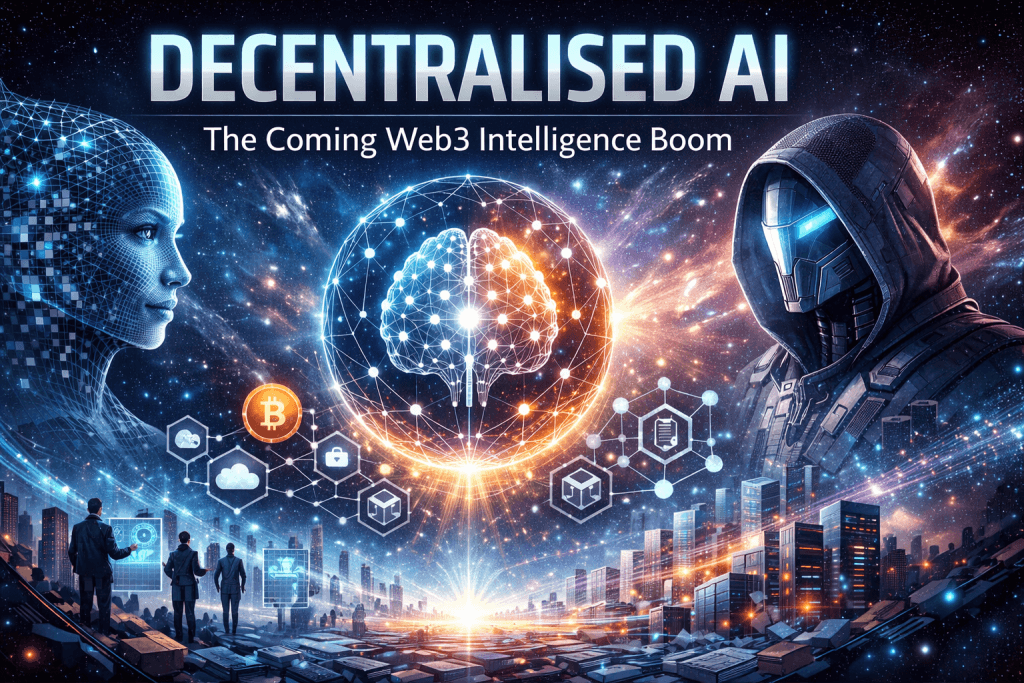
Decentralised AI represents a fundamental paradigm shift in artificial intelligence development, moving away from centralized corporate control toward distributed, community-governed networks. This convergence of blockchain technology and advanced machine learning promises to address critical issues of data sovereignty, algorithmic transparency, and equitable access that plague current AI systems. As we enter a new era of Web3 intelligence, decentralised AI is emerging not merely as a technological alternative but as a necessary evolution toward more democratic, resilient, and ethical artificial intelligence.
Core Foundations of Decentralised AI
The technical architecture of decentralised AI rests on several interconnected pillars that differentiate it from traditional, centralized approaches. At its foundation is the principle of distributed data ownership, which ensures that sensitive information remains under user control while still contributing to collective intelligence. This is enabled through privacy-preserving techniques like federated learning and homomorphic encryption, which allow models to learn from data without ever accessing it directly. A study by the Stanford Institute for Human-Centered Artificial Intelligence (2025) notes that these approaches are becoming increasingly sophisticated, potentially resolving the longstanding tension between data utility and individual privacy.
Another critical component is the incentive structure enabled by blockchain tokenomics. Unlike centralized platforms that extract value from user data, decentralised AI networks reward participants for contributing resources whether data, computational power, or model development through native tokens. According to research by Hyland-Wood and Johnson (2024), these economic models represent a significant innovation in how AI development is funded and governed, potentially democratizing access to the financial benefits of artificial intelligence.
Transparency and verifiability represent a third pillar, addressing growing concerns about algorithmic bias and accountability in traditional AI systems. By recording model provenance, training data lineage, and decision logic on immutable ledgers, decentralised AI provides an auditable trail that can be examined by users, regulators, and researchers alike. This technical transparency creates new possibilities for regulatory compliance and ethical oversight in high-stakes applications.
Current Ecosystem Landscape
The decentralised AI ecosystem has rapidly evolved from theoretical concept to practical implementation across multiple domains. Several pioneering projects illustrate the diverse approaches being developed:
Comparison of Leading Decentralised AI Projects
| Project | Primary Focus | Key Innovation | Current Stage |
|---|---|---|---|
| SingularityNET | Decentralized AGI Research | AI-native blockchain infrastructure | Live with multiple AI services |
| Fetch.ai | Autonomous Economic Agents | Self-organizing agent ecosystems | Operational with DeFi applications |
| Ocean Protocol | Decentralized Data Exchange | Tokenized data assets and privacy markets | Active data marketplace |
| Bittensor (TAO) | Machine Learning Incentives | Competitive model marketplace | Functional network with rewards |
Market indicators suggest accelerating growth in this sector. While traditional AI markets continue to expand rapidly, the intersection with Web3 technologies represents one of the fastest-growing segments. According to industry analyses, investment in decentralised AI projects increased significantly throughout 2023-2024, with both venture capital and decentralized autonomous organizations allocating substantial resources to infrastructure development (Menlo Ventures, 2025). This momentum reflects growing recognition that the current centralized model of AI development faces intrinsic limitations in governance, data access, and incentive alignment.
Practical Applications and Use Cases
Healthcare represents one of the most promising domains for decentralised AI implementation. In medical research, privacy regulations typically restrict data sharing between institutions, creating silos that hinder the development of robust diagnostic models. Decentralised AI enables hospitals to collaboratively train models on conditions like cancer detection or rare diseases without transferring sensitive patient records (Chatzou Dunford, n.d.). This approach preserves patient confidentiality while unlocking valuable insights from distributed datasets that would otherwise remain isolated.
Financial services have also emerged as early adopters of decentralised AI principles. Banks and financial institutions are exploring federated learning approaches to develop fraud detection systems that can learn from patterns across multiple organizations without compromising customer privacy or competitive information. In decentralized finance, autonomous AI agents are increasingly managing complex trading strategies and liquidity provision, operating transparently on-chain where their logic and performance can be verified by any participant.
Supply chain optimization presents another practical application domain. Autonomous agents representing different stakeholders, manufacturers, shippers, customs agencies can negotiate and coordinate in real-time using smart contracts and machine learning, potentially reducing delays, minimizing waste, and improving resilience to disruptions. These systems operate without a central intermediary, distributing trust and control across the network.
Content creation and digital rights management are being transformed by decentralised AI approaches. Platforms are emerging that use blockchain to verify provenance and ownership of AI-generated content, while smart contracts ensure creators receive fair compensation when their work is used or remixed. This addresses significant challenges in traditional content ecosystems where attribution and remuneration are often opaque or inequitable.
Implementation Challenges
Despite its transformative potential, decentralised AI faces substantial obstacles to widespread adoption. Technical challenges remain significant, particularly regarding the reconciliation of blockchain’s deterministic requirements with AI’s probabilistic nature. Training sophisticated models requires immense computational resources that can be difficult to coordinate efficiently across decentralized networks compared to centralized data centers (Gravity Team, n.d.). Solutions like specialized consensus mechanisms and layer-2 protocols are actively being developed, but scalability remains a work in progress.
Regulatory uncertainty presents another major hurdle. The legal status of AI agents, liability frameworks for decentralized autonomous organizations, and compliance with data protection laws across jurisdictions create a complex landscape for developers and users alike. As Gorgin (n.d.) notes in their analysis of intellectual property in this space, patenting innovations in decentralised AI requires navigating overlapping and sometimes conflicting regulatory frameworks that were designed for centralized technologies.
Coordination and quality assurance in decentralized environments introduce unique challenges. Without centralized authority, maintaining consistent standards for data quality, model validation, and security practices requires robust community governance mechanisms. These systems must balance efficiency with inclusivity, preventing capture by well-resourced entities while ensuring effective decision-making. The development of reputation systems and decentralized identity solutions represents an important area of innovation to address these challenges.
Market competition from established technology giants represents a formidable barrier. Companies with vast resources, proprietary datasets, and existing user bases continue to dominate the AI landscape. Decentralised AI projects must demonstrate not only technical superiority in specific aspects but also a compelling value proposition regarding privacy, transparency, and user empowerment to attract developers, investors, and users away from established platforms.
Future Trajectory and Ethical Considerations
The evolution of decentralised AI appears to be progressing toward increasingly autonomous and integrated systems. On-chain AI agents represent one promising direction, these are not simple automated scripts but sophisticated programs capable of analyzing real-time data, executing complex operations across multiple protocols, and adapting their behavior based on predefined goals and learning from outcomes. As noted by SubQuery Network (n.d.), these agents could transform how users interact with decentralized applications, managing everything from investment portfolios to supply chain logistics with minimal human intervention.
Decentralized science (DeSci) represents another frontier where decentralised AI could have transformative impact. By facilitating global, permissionless collaboration on research while ensuring data privacy and proper attribution, these systems could accelerate scientific discovery across fields from drug development to climate science. The integration of AI-assisted hypothesis generation, automated literature review, and collaborative model training could potentially democratize access to scientific tools that are currently concentrated in well-funded institutions.
Ethical governance emerges as a critical consideration as these technologies develop. Decentralised AI systems must incorporate mechanisms to align with human values, prevent harmful applications, and ensure equitable participation. Unlike centralized systems where responsibility is theoretically clearer (though often unexercised), decentralized networks require distributed accountability frameworks that are still in their infancy. Research into constitutional AI, decentralized auditing, and value-alignment mechanisms represents an important parallel track to technical development.
The long-term vision of decentralised AI extends beyond technical implementation to reimagining the relationship between humans and intelligent systems. Rather than passive users of corporate-controlled AI, individuals in a decentralised AI ecosystem become active participants, contributing data, computation, or expertise, and sharing in the governance and benefits of the systems they help create. This represents a profound shift from the extractive economics of current platforms toward more reciprocal and sustainable digital ecosystems.
Conclusion
Decentralised AI represents more than a technical innovation; it embodies a fundamental reconsideration of how artificial intelligence should be developed, governed, and deployed in society. By addressing critical limitations of centralized AI systems, including data monopolization, opaque decision-making, and misaligned incentives it offers a pathway toward more democratic and resilient intelligence systems. While significant technical, regulatory, and adoption challenges remain, the momentum behind this movement continues to grow, driven by increasing recognition that the future of AI must be more open, transparent, and equitable than its present.
The convergence of Web3 principles with artificial intelligence creates new possibilities for collaborative problem-solving at global scale while respecting individual sovereignty. As this field matures, the most successful implementations will likely be those that balance technological sophistication with thoughtful governance, creating systems that are not only more capable but also more aligned with diverse human values and needs. The coming decade will determine whether decentralised AI can fulfill its promise of redistributing power in the digital age or remain a niche alternative to increasingly centralized artificial intelligence.
References
Anglen, J. (n.d.). AI in Web3: How artificial intelligence shapes decentralized tech? Rapid Innovation. Retrieved from https://www.rapidinnovation.io/post/ai-in-web3-how-artificial-intelligence-shapes-decentralized-tech
Chatzou Dunford, M. (n.d.). Decentralized AI platform: 2025’s new era. Lifebit. Retrieved from https://lifebit.ai/blog/decentralized-ai-platform
Coinmetro. (2025, December 5). *4 Decentralized AI projects to watch in 2024*. Retrieved from https://www.coinmetro.com/learning-lab/4-decentralized-ai-projects-to-watch-in-2024
Gorgin, R. (n.d.). Navigating the patent landscape: Blockchain, AI, and cryptocurrency IP strategy. Sterne Kessler. Retrieved from https://www.sternekessler.com/news-insights/news/navigating-the-patent-landscape-blockchain-ai-and-cryptocurrency-ip-strategy/
Gravity Team. (n.d.). Decentralized AI: How crypto and AI are shaping the future. Retrieved from https://gravityteam.co/blog/decentralized-ai-convergence/
Hyland-Wood, D., & Johnson, S. (2024, November 6). Intersections of Web3 and AI – View in 2024. arXiv. https://arxiv.org/html/2411.04318v1
Menlo Ventures. (2025). 2025: The state of generative AI in the enterprise. https://menlovc.com/perspective/2025-the-state-of-generative-ai-in-the-enterprise/
SingularityNET. (n.d.). Next generation of decentralized AI. Retrieved from https://singularitynet.io/
Stanford Institute for Human-Centered Artificial Intelligence. (2025). The 2025 AI index report. Stanford University. https://hai.stanford.edu/ai-index/2025-ai-index-report
SubQuery Network. (n.d.). *Web3 technology meets AI: A new era for on-chain agents*. Medium. Retrieved from https://subquery.medium.com/web3-technology-meets-ai-a-new-era-for-on-chain-agents-7228ef8d9927