The Future of AI and Robotics
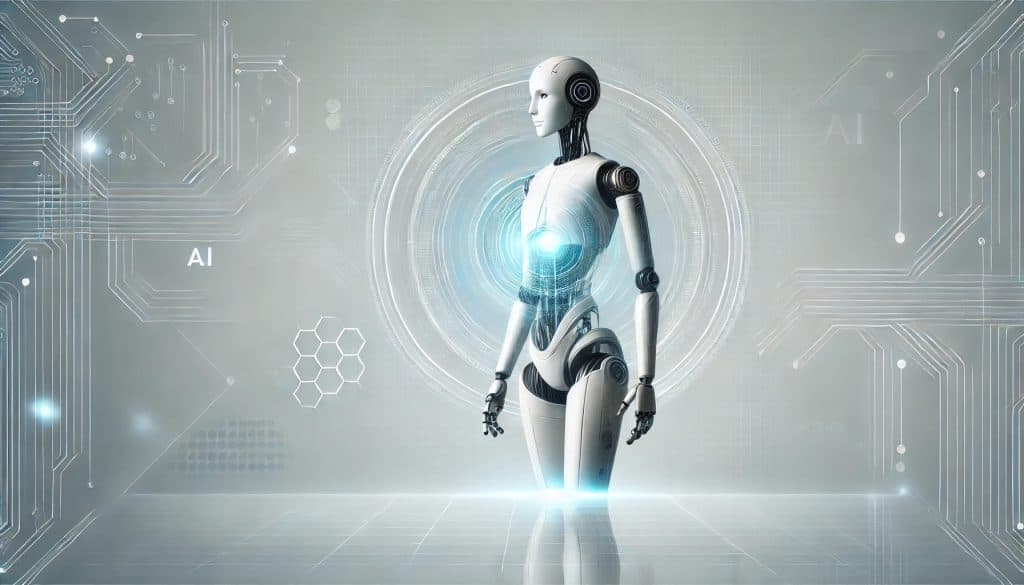
The convergence of artificial intelligence (AI) and robotics is transforming industries, societies, and economies worldwide. AI enables robots to learn, adapt, and perform complex tasks autonomously, enhancing efficiency and functionality. However, progress in robotics has been slower than expected due to challenges in computation, sensor technology, and hardware limitations. Historically, robots relied on pre-programmed instructions, lacking the adaptability AI now provides. Major breakthroughs, such as deep learning, a subset of machine learning that enables AI models to learn from vast amounts of data through artificial neural networks; advanced computer vision, which allows machines to interpret and process visual information from the real world; and the development of more affordable and precise sensors, such as LiDAR and depth cameras, which improve robots’ ability to perceive and interact with their surroundings, have significantly accelerated progress in AI-driven robotics. From self-driving cars to humanoid assistants, the fusion of AI and robotics is set to redefine the future. This article explores the trajectory of AI-robotics integration, its applications, challenges, and implications for the future.
The Evolution of AI and Robotics
AI and robotics have evolved separately over decades. Robotics, traditionally concerned with mechanical automation, has been used in manufacturing since the mid-20th century. AI, on the other hand, emerged as a field in the 1950s, but its progress was initially slow due to limitations in computational power, data availability, and algorithmic efficiency. Early AI systems relied on rule-based programming, which lacked the adaptability and learning capabilities of modern AI. The lack of processing power in early computers limited AI’s ability to handle complex calculations, and the absence of large datasets restricted its learning potential.
Breakthroughs such as deep learning, which leverages neural networks to enable AI to recognize patterns and improve decision-making, played a crucial role in advancing AI. Similarly, the introduction of powerful GPUs and TPUs significantly boosted computational efficiency, allowing AI models to process large datasets and refine their accuracy. The widespread availability of internet-connected devices has also contributed to AI’s rapid advancement, as vast amounts of real-world data can now be used to train more sophisticated models. The convergence of these technologies began accelerating with advancements in deep learning, computer vision, and sensor technology, enabling robots to perceive and interact with their environment intelligently.
Key Applications of AI-Integrated Robotics
1. Industrial Automation
The manufacturing sector has been a major beneficiary of AI-driven robotics. AI-powered robots in smart factories optimize production, reduce downtime, and improve precision. Companies like Tesla and Siemens employ collaborative robots (cobots) that work alongside human operators, enhancing productivity and workplace safety.
Unlike traditional industrial robots that are pre-programmed for repetitive tasks, AI-powered robots can adapt to changes in the production environment, making them more versatile. These robots leverage machine learning to detect inefficiencies and automatically adjust workflows to improve output. Predictive maintenance, another key feature enabled by AI, allows manufacturers to identify potential equipment failures before they occur, reducing costly downtimes and improving operational efficiency.
2. Healthcare and Medical Robotics
AI-integrated robots are revolutionizing healthcare through robotic surgery, patient care, and diagnostics. The da Vinci Surgical System, for example, uses AI algorithms to assist surgeons in performing minimally invasive procedures with enhanced precision. AI-powered robots are also being deployed for elderly care, helping address staff shortages in the healthcare sector.
Beyond surgery, AI-driven robots are increasingly being used for rehabilitation and therapy. Exoskeletons powered by AI assist patients recovering from injuries by adapting their movement to improve motor function. AI-powered robotic assistants are also helping nurses and caregivers by automating routine tasks such as medication reminders, mobility support, and patient monitoring, thus freeing up human professionals to focus on complex medical care.
3. Autonomous Vehicles
Self-driving cars, powered by AI and robotics, are reshaping the transportation industry. Companies like Tesla, Waymo, and Baidu are at the forefront of developing autonomous vehicles that leverage machine learning and sensor fusion to navigate urban environments safely. These advancements promise reduced accidents, lower traffic congestion, and increased mobility for individuals with disabilities.
AI-driven autonomous vehicles rely on a combination of LiDAR, radar, and computer vision to process their surroundings and make split-second driving decisions. Advanced reinforcement learning techniques help these vehicles continuously improve by analyzing real-world driving data. While challenges such as regulatory approval and unpredictable road conditions remain, AI-powered self-driving technology continues to advance toward mainstream adoption.
4. Agriculture and Food Production
AI-driven robots are improving agricultural efficiency through precision farming, automated harvesting, and livestock monitoring. Companies like John Deere use AI-equipped robots to optimize irrigation, detect diseases in crops, and enhance yields, addressing global food security challenges.
In addition to automated machinery, AI is being integrated into drones that monitor large agricultural fields, analyzing soil health, crop growth, and pest infestations. These insights allow farmers to make data-driven decisions, optimizing resource allocation and minimizing waste. AI-powered robotic systems are also being used to reduce the need for manual labor in harvesting, ensuring greater efficiency and consistency in food production.
5. Service and Retail Industry
AI-powered robots are increasingly used in customer service, logistics, and hospitality. AI chatbots and humanoid robots, such as SoftBank’s Pepper, provide customer support in retail stores, while warehouse robots enhance inventory management for e-commerce giants like Amazon.
Retail automation extends to cashier-less stores, where AI-driven cameras and sensors track customer purchases, eliminating the need for checkout lines. In warehouses, AI-powered robots work collaboratively with human employees to speed up order fulfilment, reducing errors and improving supply chain efficiency. The ability to personalize customer experiences through AI-driven recommendations and chatbots further enhances business operations and customer satisfaction.
6. Space Exploration and Defense
AI-enabled robotics is revolutionizing space missions. NASA’s Perseverance rover uses AI for autonomous navigation on Mars, collecting samples and conducting scientific experiments. In defence, AI-powered drones and robotic exoskeletons enhance military capabilities and reconnaissance missions.
Robotic exploration has become a crucial aspect of space missions, enabling scientists to study distant celestial bodies without human intervention. AI-driven spacecraft and landers analyze surface conditions, identify potential hazards, and adjust navigation accordingly. In defence, AI-powered robotics is integrated into autonomous military vehicles, aerial surveillance systems, and unmanned ground robots, enhancing strategic operations while minimizing human risk.
Conclusion
The convergence of AI and robotics is redefining industries and daily life, offering innovative solutions to complex problems. While challenges remain in ethical AI development, workforce adaptation, and regulatory frameworks, the potential benefits far outweigh the risks. As AI-driven robotics continues to evolve, society must embrace and guide its development to maximize its positive impact.
References
- Brynjolfsson, E., & McAfee, A. (2014). The Second Machine Age: Work, Progress, and Prosperity in a Time of Brilliant Technologies. W.W. Norton & Company.
- Russell, S., & Norvig, P. (2020). Artificial Intelligence: A Modern Approach. Pearson.
- Goodfellow, I., Bengio, Y., & Courville, A. (2016). Deep Learning. MIT Press.
- Bostrom, N. (2014). Superintelligence: Paths, Dangers, Strategies. Oxford University Press.
- Kelly, K. (2016). The Inevitable: Understanding the 12 Technological Forces That Will Shape Our Future. Viking Press.
- NASA. (2021). Perseverance Rover Mission Overview. Retrieved from https://mars.nasa.gov/mars2020/mission/overview/
- Tesla Inc. (2023). Autonomous Driving Technology. Retrieved from https://www.tesla.com/autopilot/
- SoftBank Robotics. (2023). Pepper: The Humanoid Robot. Retrieved from https://www.softbankrobotics.com/emea/en/pepper
- Waymo LLC. (2023). Self-Driving Technology Overview. Retrieved from https://waymo.com/technology/
- John Deere. (2023). AI in Agriculture. Retrieved from https://www.deere.com/en/technology-products/precision-ag-technology/