The Dawn of Fusion Energy: A World Transformed
For decades, scientists and engineers have pursued the dream of fusion energy—a power source that mimics the Sun’s natural processes to generate nearly limitless, clean energy. Now, that dream is on the cusp of becoming reality. With breakthroughs in magnetic confinement, laser-driven fusion, and innovative reactor designs, fusion energy could be commercially viable within the next few decades. But what does this mean for the world? How will the emergence of fusion energy reshape industries, economies, and societies?
Understanding Fusion Energy
Fusion energy is the process of fusing atomic nuclei to release vast amounts of energy. Unlike nuclear fission, which splits atoms and generates hazardous waste, fusion combines lightweight elements like hydrogen isotopes (deuterium and tritium) to form helium, releasing energy in the process. This method produces no greenhouse gases, offers an almost limitless fuel supply, and poses minimal risk of catastrophic failure compared to traditional nuclear power plants.
The key challenge has always been sustaining the extreme temperatures and pressures necessary for fusion reactions to occur. However, advancements in magnetic confinement, inertial confinement, and high-temperature superconductors are now overcoming these barriers.
Breakthroughs Bringing Fusion Energy Closer
Recent technological advances have propelled fusion energy from theoretical physics into practical engineering:
- Magnetic Confinement Fusion (Tokamaks & Stellarators): The International Thermonuclear Experimental Reactor (ITER) in France and SPARC in the U.S. are making progress in plasma containment, bringing us closer to net energy gain.
- Laser Inertial Fusion (NIF & Private Sector Innovations): The National Ignition Facility (NIF) in California recently achieved a historic net energy gain in a fusion reaction, proving the concept’s feasibility.
- Private Sector Investments: Companies like Helion Energy, Commonwealth Fusion Systems, and TAE Technologies are pioneering alternative approaches that could speed up commercialisation.
How Fusion Energy Will Change the World
The commercial adoption of fusion energy will have a profound impact on multiple aspects of human civilisation:
1. A Clean and Limitless Energy Source
Fusion power eliminates the need for fossil fuels, reducing carbon emissions and mitigating climate change. Unlike solar and wind, fusion provides a constant, on-demand energy source, overcoming intermittency issues. The ability to generate power around the clock, regardless of weather conditions, makes fusion a revolutionary advancement in global energy infrastructure. With virtually limitless fuel from seawater, fusion has the potential to power the world for millennia without running out of resources.
2. Economic Growth and Job Creation
Fusion energy will create a multi-trillion-dollar industry, generating millions of jobs across multiple sectors. The construction of fusion reactors will require an entirely new workforce of skilled professionals, including plasma physicists, engineers, and technicians. Additionally, the supply chain for fusion power plants—from advanced superconductors to high-performance laser systems—will drive significant industrial growth. Governments and private enterprises investing in fusion research will catalyse new markets, opening opportunities for high-tech manufacturing, energy storage solutions, and innovative reactor designs.
3. Energy Independence and Geopolitical Stability
Currently, many countries rely on fossil fuel imports, making them vulnerable to supply disruptions, price volatility, and geopolitical tensions. Fusion energy has the potential to break this dependency, enabling nations to generate their own power domestically. Since fusion fuel sources—deuterium and tritium—can be extracted from seawater and lithium, energy security will no longer be dictated by access to oil or natural gas reserves. This shift could reduce global conflicts over energy resources and foster international cooperation in energy production and distribution.
4. Revolutionising Space Exploration
The development of fusion propulsion systems could revolutionise space travel, significantly reducing the time required to reach distant planets. Unlike chemical propulsion, which is limited by fuel constraints and inefficiencies, fusion-powered spacecraft could generate continuous thrust, enabling faster and more sustainable deep-space missions. The application of compact fusion reactors could also provide energy for space habitats, lunar colonies, and interstellar missions, making long-term space exploration a tangible reality.
5. Transforming Industrial Sectors
Industries such as heavy manufacturing, desalination, and data centres will be dramatically transformed by fusion energy. Heavy industries that currently rely on coal and natural gas for high-temperature processes could transition to fusion power, drastically cutting carbon emissions. Desalination plants powered by fusion energy could provide clean drinking water to arid regions at a fraction of current energy costs, mitigating global water scarcity. Additionally, data centres—essential to modern digital infrastructure—could run on fusion energy, reducing their carbon footprint while meeting the increasing demand for computational power.
6. Decentralised Energy Distribution
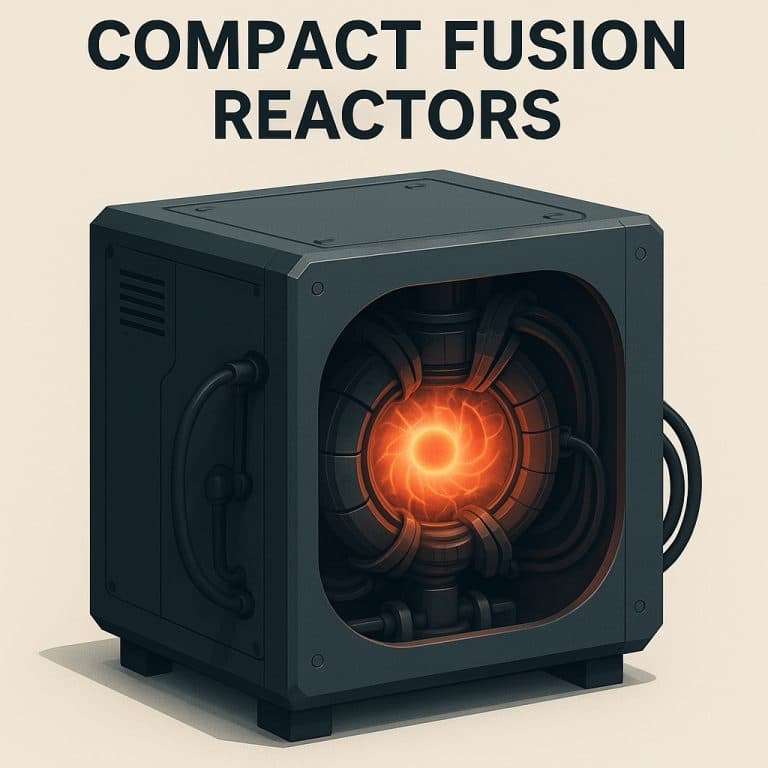
Unlike today’s centralised energy grid, which is susceptible to failures and cyber threats, fusion power could enable decentralised energy production. Future fusion reactors may be designed as modular units, capable of supplying energy to individual cities, large industrial complexes, or even remote locations without reliance on a national power grid. This distributed energy model would enhance grid stability, improve energy security, and reduce the risk of large-scale blackouts. Additionally, small-scale fusion reactors could power military installations, research stations, and disaster-relief operations, ensuring access to reliable electricity in critical scenarios.
Challenges to Overcome
Despite the promise of fusion energy, several hurdles remain before it can become commercially viable:
- Engineering Challenges: Building reactors that can withstand extreme conditions for prolonged periods.
- Funding & Investment: Developing fusion energy requires substantial capital investment, though private funding is increasing.
- Regulatory & Safety Concerns: Governments need to establish regulations for fusion plants to ensure safety and efficiency.
- Public Perception: Educating the public about fusion’s benefits and differentiating it from fission-based nuclear energy.
The Future of Fusion Energy
If ongoing research and investment continue at their current pace, practical fusion energy could be available within 20-30 years. By 2050, fusion could be a mainstream energy source, replacing coal, gas, and even some renewable sources. The first commercial fusion reactors may be connected to the grid as early as the 2030s, marking a pivotal moment in energy history.
Conclusion: A New Era of Abundance
Fusion energy represents the next great leap in human progress—offering a world free from fossil fuel dependence, geopolitical energy conflicts, and climate change threats. As we edge closer to making this vision a reality, the benefits of fusion power promise to be nothing short of revolutionary.
A world powered by fusion energy is a world of limitless potential. The dawn of this new era is coming, and when it arrives, everything will change.
References
World Nuclear Association, 2023. Nuclear Fusion Power. [online] Available at: https://www.world-nuclear.org/information-library/current-and-future-generation/nuclear-fusion-power.aspx [Accessed 4 Mar. 2025].
ITER, 2023. The International Thermonuclear Experimental Reactor. [online] Available at: https://www.iter.org/ [Accessed 4 Mar. 2025].
National Ignition Facility (NIF), 2023. Laser Inertial Fusion. [online] Available at: https://lasers.llnl.gov/ [Accessed 4 Mar. 2025].
Lawrence Livermore National Laboratory, 2023. U.S. Scientists Achieve Fusion Energy Breakthrough. [online] Available at: https://www.llnl.gov/news/us-scientists-achieve-fusion-energy-breakthrough [Accessed 4 Mar. 2025].
Helion Energy, 2023. Fusion Energy Development. [online] Available at: https://www.helionenergy.com/ [Accessed 4 Mar. 2025].
Commonwealth Fusion Systems, 2023. Advanced Fusion Research. [online] Available at: https://cfs.energy/ [Accessed 4 Mar. 2025].
TAE Technologies, 2023. Future of Fusion Energy. [online] Available at: https://tae.com/ [Accessed 4 Mar. 2025].
International Energy Agency, 2023. The Role of Fusion in the Future Energy Mix. [online] Available at: https://www.iea.org/ [Accessed 4 Mar. 2025].
McKinsey & Company, 2023. The Economic Impact of Fusion Energy. [online] Available at: https://www.mckinsey.com/ [Accessed 4 Mar. 2025].
Fusion Industry Association, 2023. Advancing Commercial Fusion. [online] Available at: https://www.fusionindustryassociation.org/ [Accessed 4 Mar. 2025].
NASA, 2023. Fusion Propulsion for Space Travel. [online] Available at: https://www.nasa.gov/ [Accessed 4 Mar. 2025].
World Economic Forum, 2023. The Future of Energy with Fusion. [online] Available at: https://www.weforum.org/ [Accessed 4 Mar. 2025].
International Atomic Energy Agency, 2023. Fusion Energy and Global Stability. [online] Available at: https://www.iaea.org/ [Accessed 4 Mar. 2025].
Nature, 2023. Advances in Fusion Reactor Technology. [online] Available at: https://www.nature.com/ [Accessed 4 Mar. 2025].
MIT Technology Review, 2023. Commercialisation of Fusion Energy. [online] Available at: https://www.technologyreview.com/ [Accessed 4 Mar. 2025].
U.S. Department of Energy, 2023. Policy and Investment in Fusion Energy. [online] Available at: https://www.energy.gov/ [Accessed 4 Mar. 2025].
Union of Concerned Scientists, 2023. The Public Perception of Fusion Energy. [online] Available at: https://www.ucsusa.org/ [Accessed 4 Mar. 2025].
The Guardian, 2023. The Race to Achieve Fusion Energy. [online] Available at: https://www.theguardian.com/ [Accessed 4 Mar. 2025].