The Convergence of AGI and Quantum Computing
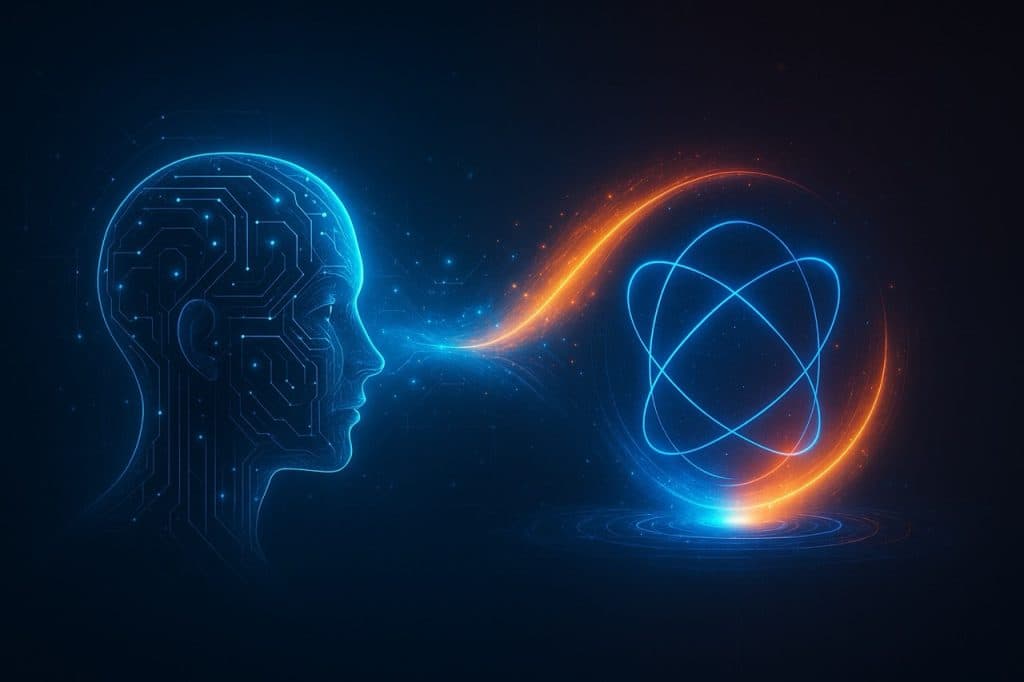
The convergence of Artificial General Intelligence (AGI) and Quantum Computing, often termed Quantum AI, represents a transformative leap in technology. AGI, the hypothetical ability of machines to perform any intellectual task a human can, combined with Quantum Computing, which leverages quantum mechanics for unprecedented processing power, could redefine industries, solve complex global challenges, and push the boundaries of computational capabilities. This article explores the potential applications, technical challenges, and ethical considerations of this convergence, providing a comprehensive view of its transformative potential and the responsibilities it entails.
Applications of Quantum AI
The synergy between AGI and Quantum Computing promises to revolutionise various sectors by leveraging the strengths of both technologies. Below are key applications, enriched with detailed examples:
- Healthcare:
- Drug Discovery: Quantum computing can simulate molecular interactions with high accuracy, significantly accelerating the discovery of new drugs and enabling personalised medicine (Cleveland Clinic, 2024). For instance, quantum algorithms can model protein folding, a critical step in drug development, which is computationally intensive for classical systems.
- Diagnostics: Enhanced data analysis through Quantum AI can lead to more accurate and early disease detection, such as identifying cancer markers in complex datasets, potentially improving patient outcomes.
- Finance:
- Risk Management: Quantum AI can optimise financial models by solving complex optimisation problems, improving risk assessment and portfolio management. This could lead to more robust financial strategies in volatile markets.
- Fraud Detection: Advanced pattern recognition capabilities can identify fraudulent activities more effectively by analysing vast datasets in real-time, enhancing security in financial transactions.
- Cryptography:
- While quantum computing threatens current encryption methods, Quantum AI can aid in developing quantum-resistant algorithms. For example, the National Institute of Standards and Technology (NIST) has identified quantum-safe cryptographic standards to protect sensitive communications (Bernstein et al., 2017).
- Materials Science:
- Quantum AI can design new materials with desired properties, such as high-temperature superconductors or advanced batteries, driving innovations in energy storage and transportation (Pasqal, 2024). This could revolutionise industries like renewable energy and electric vehicles.
- Logistics and Supply Chain:
- Solving complex optimisation problems, such as route planning or inventory management, can be made more efficient with Quantum AI, reducing costs and improving delivery times. For example, quantum algorithms could optimise global supply chains for multinational corporations.
- Climate Modelling:
- Quantum computing can simulate climate systems with greater accuracy, enabling better predictions of climate change impacts and more effective mitigation strategies (European Commission, 2020). This could inform policy decisions and disaster preparedness.
- Autonomous Systems:
- Quantum AI can enhance the decision-making capabilities of autonomous vehicles by improving image recognition and real-time data processing, leading to safer and more efficient transportation systems.
- Energy Sector:
- Quantum AI can optimise energy grids, predict energy demand, and integrate renewable energy sources more effectively, contributing to a sustainable energy future. For instance, it could improve the efficiency of solar and wind energy integration.
- Artificial Intelligence Itself:
- Quantum computing can accelerate the training and execution of AI models, particularly in natural language processing and machine learning. For example, quantum transformers have shown promise in running AI models like those powering ChatGPT on quantum hardware (Scientific American, 2024).
These applications illustrate the transformative potential of Quantum AI, showcasing its ability to address complex problems across multiple domains.
Challenges in Integrating AGI and Quantum Computing
Despite its promising applications, integrating AGI with Quantum Computing presents significant technical challenges:
- Hardware Limitations:
- Quantum computers are still in early development stages, with issues like limited qubit count, high error rates, and the need for extreme cooling conditions (Preskill, 2018). For instance, current quantum systems are prone to decoherence, where qubits lose their quantum state, leading to computational errors.
- Integration Complexity:
- Combining quantum computing with AI requires developing new algorithms and architectures that can effectively utilise quantum properties for AI tasks (Biamonte et al., 2017). This is a complex process, as classical AI algorithms must be adapted to work with quantum systems.
- Scalability:
- Achieving fault-tolerant quantum computing is crucial but remains a significant hurdle. Current quantum systems struggle with maintaining coherence over large numbers of qubits, limiting their practical use (Preskill, 2018).
- Resource Demands:
- Both fields require substantial computational power, energy, and expertise. This can limit accessibility, as only well-funded institutions or countries can afford the necessary infrastructure (S&P Global, 2024).
- Algorithm Development:
- Creating quantum algorithms that outperform classical ones for specific AI tasks is still an area of active research. For example, while quantum machine learning algorithms exist, their practical advantages over classical methods are not yet fully realised (Cerezo et al., 2021).
- Error Rates:
- High error rates in current quantum hardware necessitate advanced error correction techniques, which are still being developed (Broughton et al., 2021).
- Talent Shortage:
- There is a scarcity of experts with the interdisciplinary knowledge required to work at the intersection of quantum computing and AI. This shortage could slow progress in the field (S&P Global, 2024).
Addressing these challenges will require sustained investment in research, development of new technologies, and collaboration across academia, industry, and government.
Ethical Considerations of Quantum AI
The convergence of AGI and Quantum Computing also raises profound ethical considerations that must be addressed to ensure responsible development and deployment:
- Privacy and Security:
- Quantum computing’s ability to break current encryption methods poses a significant risk to data privacy and security. For instance, Shor’s algorithm can factor large numbers exponentially faster than classical methods, threatening RSA encryption (Deloitte, 2022).
- Bias and Fairness:
- Quantum AI systems could inherit or amplify biases present in training data, leading to discriminatory outcomes. For example, if quantum-enhanced AI is used in hiring or lending, biased data could result in unfair decisions (Cloud Security Alliance, 2025).
- Transparency and Accountability:
- The complexity of quantum algorithms makes it difficult to understand their decision-making processes. This lack of explainability can undermine trust and accountability, especially in critical applications like healthcare or finance (ResearchGate, 2025).
- Job Displacement:
- The efficiency of Quantum AI could lead to widespread automation, displacing jobs across industries. This necessitates strategies for workforce retraining and social support (Frey & Osborne, 2017).
- Resource Inequality:
- The high resource demands of quantum computing could exacerbate global inequalities. Only well-funded institutions and countries may have access to this technology, widening the digital divide (Quera, 2024).
- Misuse of Technology:
- There is a risk that quantum computing could be used for malicious purposes, such as developing more sophisticated cyber weapons or enabling mass surveillance (QuantumZeitgeist, 2024).
- Ethical Frameworks:
- Establishing comprehensive ethical guidelines and regulatory frameworks is essential. For example, organisations like the World Economic Forum and the National Academies of Sciences are working on ethical frameworks for quantum technologies (Quera, 2024).
- Global Cooperation:
- International collaboration is needed to set standards and ensure equitable distribution of Quantum AI benefits. For instance, the European Union’s Quantum Technologies Flagship programme emphasises ethical and societal implications (European Commission, 2020).
- Explainability:
- Ensuring that quantum AI models are explainable is crucial for regulatory compliance and public trust. This is particularly challenging given the non-intuitive nature of quantum mechanics (EY, 2022).
By proactively addressing these ethical considerations, we can harness the power of Quantum AI while minimising potential harms and ensuring its development aligns with human values.
Conclusion
The convergence of Artificial General Intelligence and Quantum Computing represents a pivotal moment in technological history, with the potential to solve some of humanity’s most pressing challenges. From revolutionising healthcare and finance to advancing our understanding of climate change, the applications are vast and transformative. However, this potential comes with significant challenges, including technical hurdles in integration and scalability, as well as ethical concerns around privacy, bias, and accessibility.
As we stand on the brink of this new era, it is imperative that we approach the development of Quantum AI with caution, foresight, and a commitment to ethical principles. By fostering collaboration across disciplines and geographies, investing in education and workforce development, and establishing robust regulatory frameworks, we can ensure that the benefits of this technology are realised responsibly and equitably.
The future of technology lies in our ability to innovate wisely, balancing the pursuit of progress with the preservation of our shared values. The journey towards realising the full potential of Quantum AI is just beginning, and it will require the collective effort of scientists, policymakers, industry leaders, and the public to navigate its complexities and harness its power for the greater good.
References
- Alexeev, Y., et al. (2024). Artificial Intelligence for Quantum Computing. arXiv. Available at: arXiv:2411.09131
- Biamonte, J., et al. (2017). Quantum Machine Learning. Nature, 549(7671), pp. 195–202. DOI: 10.1038/nature23474
- Bernstein, D.J., et al. (2017). Post-Quantum Cryptography. Springer.
- Broughton, M., et al. (2021). Quantum Error Correction with Machine Learning. Nature Communications, 12(1), pp. 1–10. DOI: 10.1038/s41467-021-21465-5
- Cerezo, M., et al. (2021). Variational Quantum Algorithms. Nature Reviews Physics, 3(9), pp. 625–644. DOI: 10.1038/s42254-021-00348-9
- Cleveland Clinic (2024). How Quantum Computing Will Affect Artificial Intelligence Applications in Healthcare. Available at: lerner.ccf.org
- Cloud Security Alliance (2025). The Relationship Between AI and Quantum Computing. Available at: cloudsecurityalliance.org
- Deloitte (2022). Quantum Computing May Create Ethical Risks for Businesses. It’s Time to Prepare. Available at: deloitte.com
- European Commission (2020). Quantum Technologies Flagship. Available at: ec.europa.eu
- Frey, C.B. & Osborne, M.A. (2017). The Future of Employment: How Susceptible Are Jobs to Computerisation? Technological Forecasting and Social Change, 114, pp. 254–280. DOI: 10.1016/j.techfore.2016.08.019
- Pasqal (2024). How Quantum Powers Artificial Intelligence. Available at: pasqal.com
- Physics World (2021). Why we need to consider the ethical implications of quantum technologies. Available at: physicsworld.com
- Preskill, J. (2018). Quantum Computing in the NISQ Era and Beyond. Quantum, 2, p. 79. DOI: 10.22331/q-2018-08-06-79
- Quera (2024). Quantum Ethics. Available at: quera.com
- QuantumZeitgeist (2024). The Ethics of Quantum Computing: Considerations and Challenges. Available at: quantumzeitgeist.com
- ResearchGate (2025). Ethical Considerations in Quantum-Enhanced AI. Available at: researchgate.net
- S&P Global (2024). Artificial Intelligence and Quantum Computing: The Fundamentals. Available at: spglobal.com
- Scientific American (2024). Quantum Computers Can Run Powerful AI That Works like the Brain. Available at: scientificamerican.com
- EY (2022). Towards quantum ethics. Available at: ey.com