AI and the 100 Year Life: Tech Powered Longevity
Tech powered longevity represents a fundamental transformation in human health, driven by the convergence of artificial intelligence (AI) and biotechnology. This new paradigm shifts our focus from merely treating disease to proactively extending healthspan, the period of life spent in good health. By leveraging AI to analyze vast, complex datasets, we are moving closer to making a healthy 100-year life a tangible reality for more people.
The Data Foundation of Personalized Health
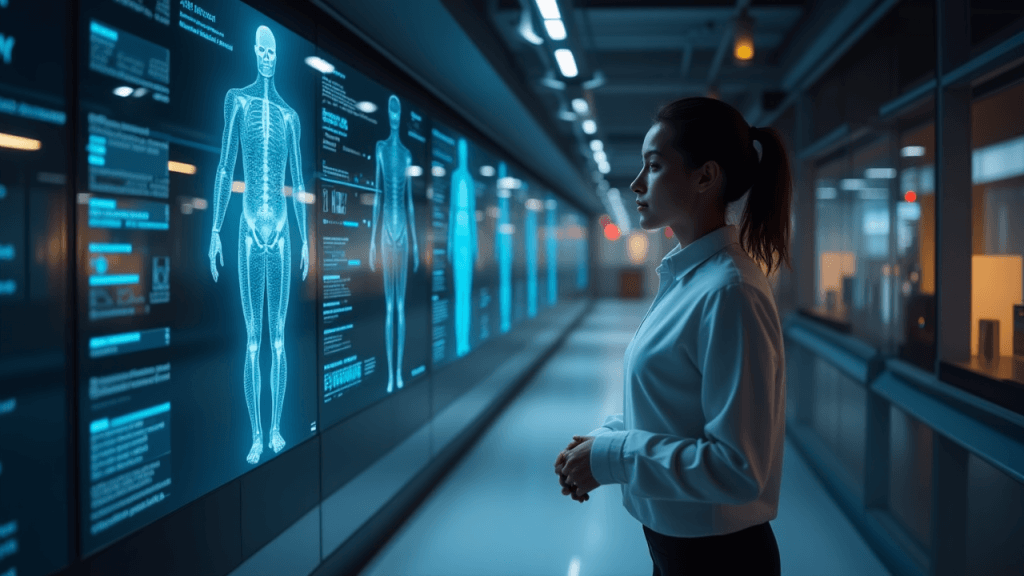
The engine of tech powered longevity is data. Wearables, genomic sequencing, and advanced imaging generate unprecedented amounts of personal health information. AI’s unique capability lies in deciphering this complex data ocean, identifying subtle patterns and risk factors long before clinical symptoms appear. This enables a shift from generic, population-based medicine to hyper-individualized health strategies. For instance, machine learning models can now analyze retinal scans or blood biomarkers to predict the risk of cardiovascular disease, diabetes, or cognitive decline with remarkable accuracy, allowing for early, personalized interventions (Rutledge et al., 2022; Moqri et al., 2023). This predictive, data-driven approach forms the essential foundation of tech powered longevity.
Accelerating Discovery in Longevity Biotechnology
One of the most promising applications of tech powered longevity is the radical acceleration of drug discovery and development for age-related diseases. Traditional methods are slow and costly; AI can screen billions of molecular compounds in silico to identify promising candidates that target the fundamental hallmarks of aging. Researchers are using these tools to discover novel senolytics (drugs that clear aged “zombie” cells) and to repurpose existing medications for longevity benefits. This acceleration is critical for translating geroscience the study of aging’s biological mechanisms, into practical therapies that compress morbidity and extend healthspan (Lyu et al., 2024; Clay et al., 2025).
The Rise of AI-Powered Aging Clocks
Beyond drug discovery, AI is refining our very definition of aging through the development of sophisticated “aging clocks.” These are machine learning models that estimate biological age by analyzing patterns in biomarkers like DNA methylation. Unlike chronological age, biological age reflects an individual’s true physiological state. Next-generation clocks are evolving from descriptive tools to causal models that can better predict how lifestyle or pharmaceutical interventions might slow or even reverse aging processes. This deep, mechanistic insight is key to moving tech powered longevity from theory to measurable, personalized practice (Ying et al., 2024).
Ambient Intelligence and Daily Health Integration
The most immediate impact of tech powered longevity for individuals is the rise of ambient, AI-integrated health tools. Smart devices and home sensors can passively monitor vital signs, detect falls, and observe changes in gait or sleep patterns that may indicate health issues. Coupled with AI health coaches that provide personalized nutrition, exercise, and sleep guidance, this ecosystem enables proactive health management and supports “aging in place.” These technologies empower individuals to take daily control of their healthspan, making the principles of tech powered longevity a lived reality.
Transforming Diagnostics and Clinical Care
n clinical settings, tech powered longevity is already supercharging diagnostics, a cornerstone of preventive health. Algorithms are outperforming humans in analyzing medical images for early signs of cancers, diabetic retinopathy, and neurological conditions. By enabling earlier and more accurate detection, AI turns fatal diseases into manageable chronic conditions. Furthermore, AI-powered clinical decision support systems help physicians personalize treatment plans by synthesizing a patient’s unique history with the latest medical research, ensuring care is as precise and effective as possible (Topol, 2019).
The Societal Reboot for a Century of Life
Achieving tech powered longevity requires more than biomedical advances; it necessitates a societal reboot. The traditional three-stage life model (education, work, retirement) is ill-suited for a 100-year lifespan. Society must adapt to facilitate multi-stage lives with periods for reskilling, career transitions, and purposeful engagement at all ages. This shift also creates the “Longevity Economy,” where older adults drive innovation as a powerful consumer bloc. Businesses, policymakers, and educational institutions must collaborate to build financial, social, and urban infrastructures that support longer, more dynamic lives (Gratton & Scott, 2016).
Navigating Ethical and Equity Challenges
The path to equitable tech powered longevity is fraught with challenges. Without deliberate design and policy, these technologies risk exacerbating health disparities, creating a “longevity divide” accessible only to the wealthy. Critical issues of data privacy, algorithmic bias, and informed consent must be addressed. Furthermore, the ethical implications of significantly extending life from resource allocation to redefining life’s meaning demand broad public discourse. Ensuring that the benefits of tech powered longevity are distributed justly is one of the most important challenges of our time.
A Future of Extended Human Flourishing
In conclusion, tech powered longevity represents a fundamental reimagining of human health and potential. Powered by AI, it integrates predictive analytics, accelerated drug discovery, personalized biomarkers, and ambient monitoring into a cohesive framework for extending healthspan. The goal is not merely to add years to life, but to add life to years enabling decades of vitality, purpose, and contribution. Realizing this future depends on our commitment to responsible innovation, ethical foresight, and global equity, ensuring that the promise of a flourishing 100-year life becomes a reality for all.
References
Aliper, A., Ashirov, R., Izumchenko, E., & Zhavoronkov, A. (2023). Towards AI-driven longevity research: An overview. Frontiers in Aging, 4, 1057204. https://doi.org/10.3389/fragi.2023.1057204
Clay, K., Avchaciov, K., Denislov, K., Burmistrova, O., Fedichev, P. O., & Petrascheck, M. (2025). AI-driven identification of exceptionally efficacious polypharmacological compounds that extend the lifespan of Caenorhabditis elegans. Aging Cell, e14464. https://doi.org/10.1111/acel.14464
Gratton, L., & Scott, A. (2016). *The 100-year life: Living and working in an age of longevity*. Bloomsbury Publishing.
Lyu, Y. X., Zhavoronkov, A., Scheibye-Knudsen, M., & Bakula, D. (2024). Longevity biotechnology: Bridging AI, biomarkers, geroscience and clinical applications for healthy longevity. Aging, 16(20), 12955–12976. https://doi.org/10.18632/aging.206135
Moqri, M., Herzog, C., Poganik, J. R., et al. (2023). Biomarkers of aging for the identification and evaluation of longevity interventions. Cell, 186(18), 3758–3775. https://doi.org/10.1016/j.cell.2023.08.003
Rutledge, J., Oh, H., & Wyss-Coray, T. (2022). Measuring biological age using omics data. Nature Reviews Genetics, 23, 715–727. https://doi.org/10.1038/s41576-022-00511-7
Topol, E. J. (2019). Deep medicine: How artificial intelligence can make healthcare human again. Basic Books.
Ying, K., Liu, Y., & Aging, A. C. (2024). Do we actually need aging clocks? npj Aging, 1, 48. https://doi.org/10.1038/s41514-025-00312-2