Smart Cities: What Living in a Tech-Powered City Will Look Like
Smart Cities: The Future of Urban Living
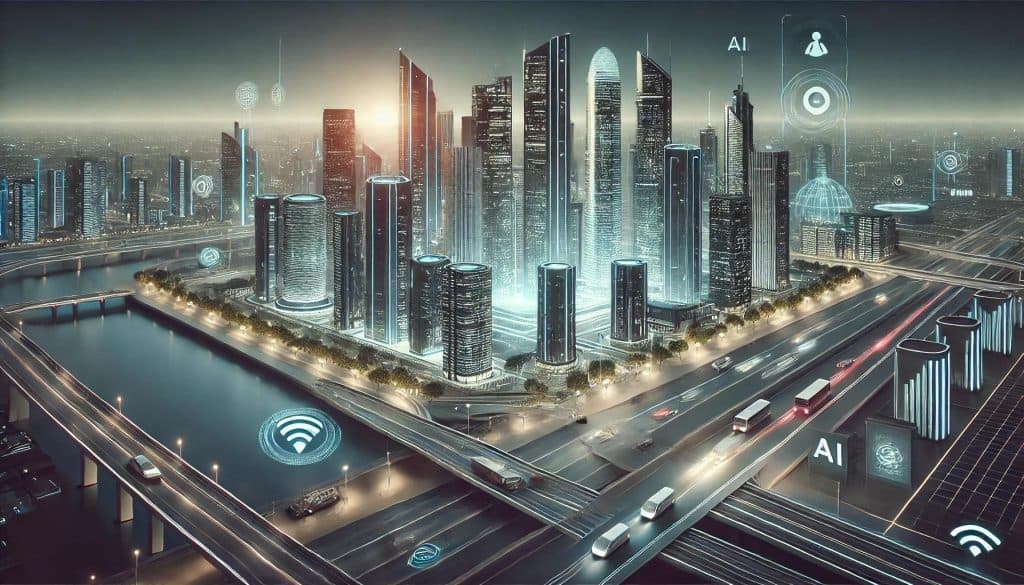
Smart cities are transforming the way we live, work, and interact with our surroundings. As urban populations grow, cities worldwide are turning to technology to improve efficiency, sustainability, and quality of life. Smart cities leverage artificial intelligence (AI), the Internet of Things (IoT), and data-driven solutions to transform urban living. From real-time traffic management to AI-powered public services, the future of cities is being shaped by cutting-edge technology (World Economic Forum, 2022).
Key Features of a Smart City
1. Smart Infrastructure and Urban Planning
Smart cities rely on data-driven urban planning to optimize traffic flow, reduce energy consumption, and improve public transportation. AI and big data help city planners make informed decisions about infrastructure development, ensuring resources are used efficiently (MIT Technology Review, 2023).
- Smart roads equipped with IoT sensors can adapt to real-time traffic conditions, reducing congestion and emissions.
- Digital twins create virtual replicas of cities to simulate and test urban development projects before implementation (Smart Cities Council, 2023).
- Case Study: Singapore’s Smart Nation initiative employs digital twin technology to optimize urban planning and infrastructure development, enhancing city efficiency (MIT Technology Review, 2023).
2. AI and IoT in Public Services
AI and IoT-powered solutions enhance public services, improving everything from waste management to emergency response systems.
- Smart waste management uses IoT sensors to monitor bin levels and optimize garbage collection routes, reducing costs and environmental impact (National Geographic, 2023).
- AI-driven emergency response systems use predictive analytics to dispatch first responders efficiently, potentially saving lives (McKinsey, 2023).
- Case Study: Barcelona’s smart waste collection system, which uses IoT-enabled bins and AI-driven collection routes, has reduced waste collection costs by 15% (Smart Cities Council, 2023).
3. Sustainable Energy Solutions
Energy efficiency is a core component of smart cities. Renewable energy sources, AI-driven grid management, and smart meters enable cities to reduce carbon footprints.
- Smart grids distribute energy efficiently based on demand, reducing waste and improving reliability.
- Solar-powered smart streetlights adjust brightness based on pedestrian activity, conserving energy (MIT Technology Review, 2023).
- Case Study: Amsterdam’s smart grid integrates renewable energy sources with AI-powered energy distribution, optimizing consumption and lowering energy waste (McKinsey, 2023).
4. Autonomous Transportation and Mobility
Smart cities will revolutionize how people move around through autonomous vehicles, ride-sharing platforms, and intelligent public transport systems.
- Self-driving buses and taxis provide safe, efficient, and eco-friendly transportation (McKinsey, 2023).
- AI-powered traffic management reduces congestion by analyzing and controlling traffic lights in real time.
- Hyperloop systems and smart rail networks could dramatically cut travel times between urban hubs (World Economic Forum, 2022).
- Case Study: Dubai’s autonomous taxi initiative aims to make 25% of transport self-driving by 2030, improving efficiency and reducing emissions (MIT Technology Review, 2023).
5. AI-Powered Healthcare and Safety
Smart healthcare systems utilize AI, IoT, and telemedicine to provide better and more accessible medical services.
- Remote patient monitoring allows doctors to track health metrics in real time, reducing hospital visits (National Geographic, 2023).
- AI-based diagnostics assist medical professionals in early disease detection and treatment.
- Case Study: South Korea’s AI-driven pandemic response used smart tracking and real-time data analysis to contain COVID-19 outbreaks efficiently (Smart Cities Council, 2023).
Public safety also benefits from smart city technology:
- AI-driven surveillance enhances security while ensuring privacy through facial recognition limitations.
- Predictive policing uses data analytics to prevent crime and deploy resources effectively (Smart Cities Council, 2023).
6. Smart Homes and Connected Living
The integration of IoT in residential areas makes smart homes a key part of future cities.
- Voice-activated assistants control lighting, heating, and security systems.
- Automated appliances adjust based on usage patterns, reducing energy consumption.
- Smart building materials regulate indoor temperatures, lowering heating and cooling costs (McKinsey, 2023).
- Case Study: Tokyo’s smart apartment complexes integrate IoT and AI to optimize energy use, lowering costs for residents (World Economic Forum, 2022).
Conclusion
Smart cities represent the future of urban living, integrating AI, IoT, and renewable energy to create efficient, sustainable, and technologically advanced environments. While challenges remain, ongoing innovations will shape the cities of tomorrow, making them smarter, safer, and more connected than ever (National Geographic, 2023).
References
- McKinsey – The Economic Impact of Smart Cities (2023)
- World Economic Forum – The Future of Smart Cities (2022)
- MIT Technology Review – How AI is Transforming Urban Living (2023)
- Smart Cities Council – Innovations in Urban Technology (2023)
- National Geographic – Sustainability in Future Cities (2023)