Molten Salt Reactors: China’s Breakthrough and the Future of Safer, Sustainable Nuclear Energy
The global transition to cleaner energy solutions has never been more urgent. As fossil fuels continue to strain the environment and traditional nuclear options face scrutiny over safety and waste, one technology is emerging from the shadows of history with renewed promise: molten salt reactors (MSRs). With China’s recent completion of a pilot molten salt reactor, the world may be witnessing the dawn of a new era in nuclear energy.
What Are Molten Salt Reactors?
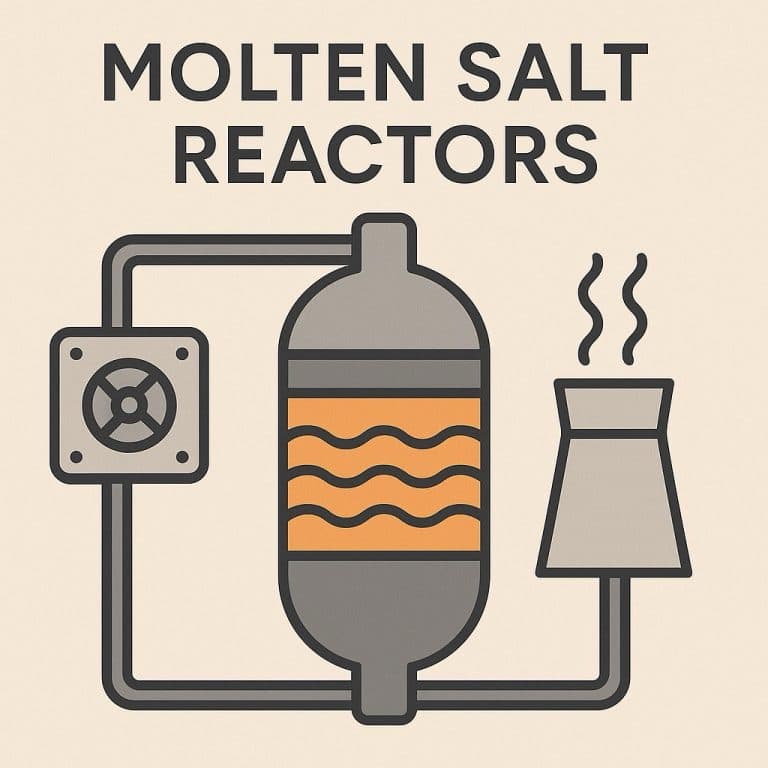
Molten salt reactors are a type of advanced nuclear reactor that use molten fluoride or chloride salts as both a coolant and, in some designs, a solvent for the nuclear fuel itself. Unlike conventional reactors, which use water to cool solid fuel rods, MSRs operate at higher temperatures and lower pressures, reducing many of the inherent risks of traditional nuclear plants.
The concept dates back to the 1950s when the United States developed and tested an MSR at Oak Ridge National Laboratory. Despite early promise, development stalled due to political and economic reasons, not technical ones. Today, interest has surged once again, driven by the need for safer, more efficient, and more sustainable energy technologies.
China’s Milestone Reactor
In 2024, China officially completed and began commissioning its first experimental molten salt reactor in Wuwei, Gansu Province. Developed by the Shanghai Institute of Applied Physics (SINAP), this 2-megawatt prototype is designed to operate with thorium-based fuel, offering a safer and more abundant alternative to uranium.
Unlike pressurised water reactors, China’s MSR operates at atmospheric pressure, significantly lowering the risk of explosive failures. Furthermore, if a leak occurs, the molten salt would solidify on exposure to air, naturally containing radiation.
This project is not just a scientific milestone; it’s a signal of China’s strategic commitment to advanced nuclear innovation. If successful, it could pave the way for commercial-scale deployment by 2030, potentially influencing global energy dynamics.
Why Molten Salt Reactors Matter
1. Safety First
MSRs have several inherent safety advantages. Their passive safety features allow the reactor to shut down without human intervention in emergencies. The design avoids the need for high-pressure systems and prevents meltdowns through physics, not just engineering.
2. Efficient Fuel Use
Molten salt reactors can potentially utilise thorium—a more abundant element than uranium—and extract more energy per unit of fuel. This also means they produce significantly less long-lived radioactive waste.
3. Sustainability and Decarbonisation
As countries look to meet ambitious net-zero targets, nuclear power will play a critical role. MSRs provide a scalable solution with fewer geopolitical and environmental concerns. They can complement renewables by providing reliable baseload power without the carbon emissions.
4. Potential for Decentralised Energy
Smaller-scale MSR units could be deployed in remote regions or paired with industrial processes like hydrogen production, desalination, or materials manufacturing—opening opportunities beyond just grid electricity.
Challenges to Overcome
Despite their promise, MSRs are not without hurdles. Materials compatibility at high temperatures, corrosion control, fuel reprocessing technologies, and regulatory frameworks remain key areas for development. There’s also the need for international cooperation and transparent governance to ensure the safe, responsible use of this next-gen nuclear tech.
China’s bold leap forward provides a real-world testbed to address these concerns. The global scientific community will be watching closely to see how the project unfolds.
What This Means for the Future
The successful deployment of molten salt reactors could catalyse a fundamental shift in how we think about nuclear power. Safe, small-scale, and sustainable, these systems could solve many of the dilemmas facing today’s energy landscape—from climate change to energy equity.
As we stand at the intersection of energy innovation and environmental necessity, molten salt reactors offer a compelling glimpse of what’s possible. For forward-looking companies, investors, and governments, now is the time to engage, explore, and invest in this transformative technology.
Conclusion
Molten salt reactors embody the very essence of futurist technology: elegant, efficient, and game-changing. As China accelerates its nuclear innovation agenda, the rest of the world should take note. The energy transition isn’t just about more renewables—it’s about better, smarter systems. MSRs could be one of the most important keys to unlocking a carbon-neutral future.
Subscribe to InnomatInc for in-depth insights into breakthrough technologies redefining energy, sustainability, and innovation. Stay ahead of the curve and help shape the next era of clean power.
References
- Leung, M., 2024. China’s Thorium-Powered Molten Salt Reactor Begins Operations. World Nuclear News.
- Forsberg, C.W., 2018. “Molten Salt Reactors.” Annual Review of Nuclear and Particle Science, 68, pp.1–22.
- World Nuclear Association, 2024. Advanced Nuclear Power Reactors.
- Sorensen, K., 2022. Thorium Energy for the World. Springer.