Mars Colonisation: How Close Are We to Living on Mars?
Mars colonisation has long been a goal for humanity, offering the possibility of expanding beyond Earth and establishing a self-sustaining civilization on another planet. Humanity has always looked to the stars, and Mars has long been considered the most viable planet for colonisation. As Earth faces increasing challenges such as climate change, overpopulation, and resource depletion, the idea of establishing a permanent human settlement on Mars is gaining traction. But how close are we to making this a reality?
Recent advancements in space technology, artificial intelligence, and biotechnology are bringing Mars colonisation closer than ever. Companies like SpaceX, NASA, and Blue Origin are heavily investing in interplanetary travel, while breakthroughs in life-support systems, AI automation, and bioengineering are tackling the critical challenges of sustaining human life on the Red Planet (Musk, 2021; NASA, 2023).
The Challenges of Living on Mars
1. The Journey to Mars
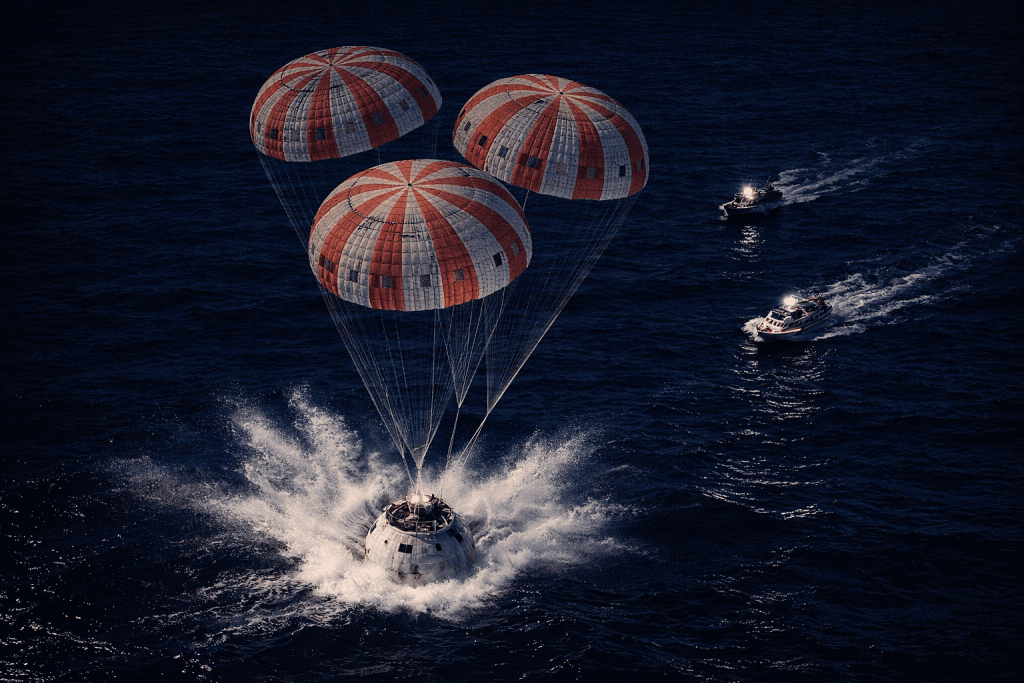
One of the biggest obstacles to Mars colonisation is the journey itself. A trip to Mars takes between six and nine months, depending on planetary alignment and propulsion technology. Traditional chemical rockets require vast amounts of fuel, making travel expensive and inefficient. However, innovations like nuclear thermal propulsion and ion drives could significantly reduce travel time and improve efficiency (NASA, 2022).
SpaceX’s Starship, designed to be fully reusable, aims to transport humans to Mars at a fraction of the cost of previous missions. With successful test flights already completed, it represents a major step forward in interplanetary travel (SpaceX, 2023).
2. Surviving the Harsh Environment
Mars is an inhospitable world with extreme conditions:
- Thin Atmosphere: Mars’ atmosphere is only 1% as dense as Earth’s, making it impossible for humans to breathe without life-support systems (Zubrin, 2020).
- Radiation Exposure: Without a protective magnetic field, Mars is constantly bombarded by cosmic radiation, posing significant health risks to astronauts (ESA, 2021).
- Extreme Temperatures: The average temperature on Mars is -63°C, requiring advanced heating and insulation technologies (NASA, 2023).
To overcome these challenges, scientists are developing radiation-shielded habitats and bioregenerative life-support systems that recycle air, water, and waste to sustain human life (NASA, 2023).
The Timeline for Mars Colonisation
1. Near-Term Goals (2025-2035)
- 2025-2028: NASA’s Artemis program aims to establish a sustainable presence on the Moon as a stepping stone for Mars (NASA, 2023).
- 2029-2035: SpaceX plans to send cargo missions to Mars, followed by the first human landings (Musk, 2023).
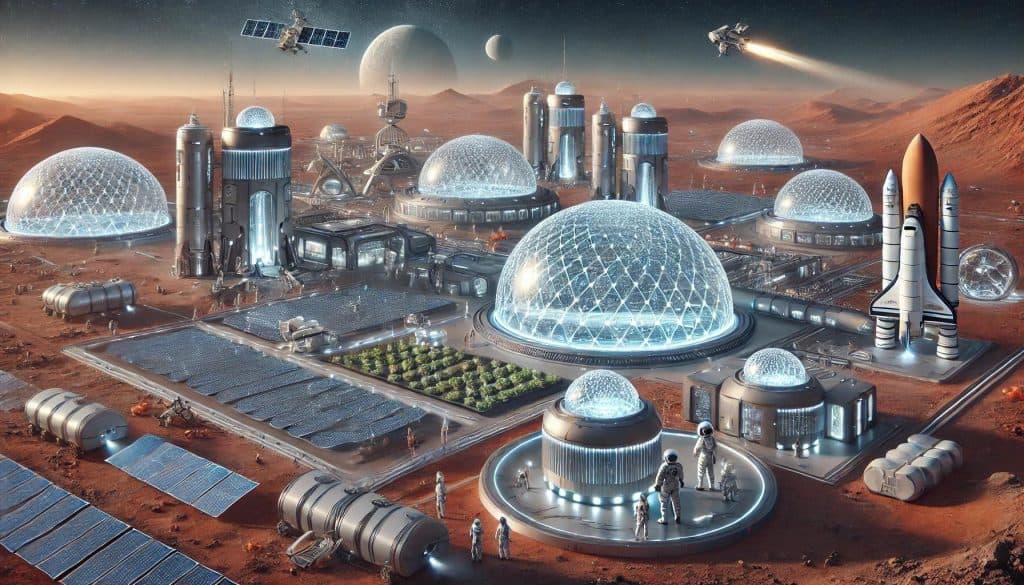
- Early 2030s: Construction of the first self-sustaining habitat, powered by solar and nuclear energy (Levy, 2023).
Ethical and Legal Considerations
While the excitement around Mars colonisation is high, ethical and legal challenges must be addressed:
- Who owns Mars? The Outer Space Treaty (1967) states that no nation can claim sovereignty over celestial bodies, but private companies complicate this issue (UNOOSA, 2023).
- Environmental impact: Should Mars be preserved as a scientific wonder, or transformed for human benefit? (Levy, 2022).
- Human rights and governance: How will laws, governance, and societal structures be established on Mars? (Zubrin, 2023).
Conclusion: How Close Are We?
Mars colonisation is no longer just a sci-fi fantasy. With rapid advancements in AI, biotechnology, and space travel, humanity is closer than ever to establishing a presence on the Red Planet. While significant challenges remain—ranging from radiation exposure to ethical dilemmas—the first human missions to Mars could happen within the next 10-15 years (NASA, 2023).
As technology progresses, Mars could transform from a barren world into a self-sustaining human colony, marking one of the greatest achievements in human history. The journey will be long and challenging, but the dream of living on Mars is closer than ever before (Musk, 2023).
References
- Elon Musk, 2021 – SpaceX Mars Plan
- NASA, 2023 – Mars Exploration
- NASA, 2022 – Nuclear Thermal Propulsion
- SpaceX, 2023 – Starship
- NASA, 2023 – Mars Temperature
- ESA, 2021 – Mars Radiation
- NASA, 2023 – Life Support Systems
- UNOOSA, 2023 – Space Law
- Zubrin, 2023 – Mars Governance
- Levy, 2022 – Mars Terraforming
- NASA, 2023 – Mars Ice Caps
- Smith, 2022 – Genetic Engineering for Mars