How AI Learns to Sound Human with NLP
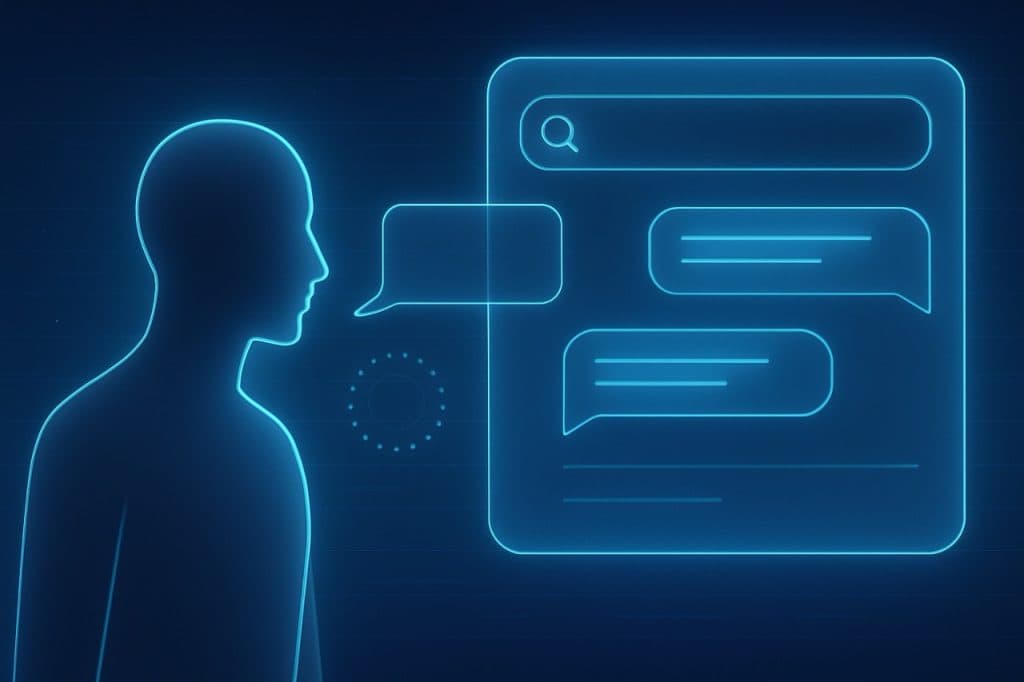
One of the most captivating advancements is the ability of machines to communicate in ways that mirror human language. This capability is driven by Natural Language Processing (NLP), a subfield of AI that integrates computer science, linguistics, and machine learning to enable computers to understand, interpret, and generate human language. As of 2025, NLP has made significant strides, powering applications from virtual assistants to automated content generation. However, achieving truly human-like language remains a complex challenge, with ongoing debates about whether AI can ever fully understand language as humans do. This article explores how NLP enables AI to sound human, the critical role of context awareness, and the challenges in achieving human-like output, offering insights into the future of AI-driven communication.
What is Natural Language Processing (NLP)?
Natural Language Processing (NLP) is a branch of artificial intelligence that focuses on enabling computers to process and generate human language in a way that is both meaningful and contextually appropriate. By combining computational linguistics with machine learning and deep learning, NLP bridges the gap between human communication and machine comprehension. It powers a wide range of applications, including chatbots, voice assistants like Siri and Alexa, sentiment analysis, and machine translation tools like Google Translate.
NLP has evolved significantly since its inception in the 1950s. Early systems, such as ELIZA (1964–1966), relied on simple pattern-matching to simulate conversation, but modern NLP leverages advanced neural networks and large language models (LLMs) like GPT-3 and LaMDA. These models are trained on billions of words from diverse sources, enabling them to generate responses that are increasingly indistinguishable from human communication. NLP is divided into two key areas:
- Natural Language Understanding (NLU): Focuses on parsing and understanding the meaning of text or speech, such as identifying user intent or extracting key information.
- Natural Language Generation (NLG): Involves generating human-like text or speech from structured data, used in applications like automated reports or creative writing.
These advancements align with broader trends in innovation, enabling seamless human-machine interaction in fields like advanced manufacturing and sustainability.
How NLP Enables AI to Sound Human
NLP enables AI to sound human by processing and generating language in ways that mimic human communication. This is achieved through several key mechanisms:
- Training on Large Datasets: NLP models are trained on vast corpora of text data, including books, articles, and websites. This allows them to learn language patterns, grammar, and semantics. For instance, GPT-3, with its 175 billion parameters, can generate coherent and contextually relevant responses by drawing on its extensive training data (Brown et al., 2020).
- Advanced Neural Networks: Modern NLP relies on transformer-based models like BERT and GPT, which use attention mechanisms to focus on relevant parts of the input text. This enhances the natural flow of generated text by understanding relationships between words. For example, LaMDA has demonstrated conversational abilities that some have mistaken for human-like sentience, though this remains controversial (DeepLearning.AI, 2022).
- Semantic Understanding: Techniques like word embeddings (e.g., Word2Vec, GloVe) represent words as vectors in high-dimensional spaces, capturing semantic relationships. Contextual embeddings, used in models like BERT, consider the context in which words appear, improving understanding of nuanced meanings (Devlin et al., 2018).
- Cognitive Approaches: Some NLP systems incorporate cognitive theories, such as George Lakoff’s conceptual metaphor theory, to understand and generate human-like dialogue. For example, understanding metaphors like “time is money” helps AI produce more natural responses.
- Text Generation: NLP enables AI to generate coherent text for various purposes, such as articles, marketing copy, or creative writing. By understanding tone, style, and context, AI can produce output that feels human-like. For instance, GPT-3 has been used to write original prose that rivals human writing (The New York Times, 2022).
Recent advancements in LLMs have further enhanced AI’s ability to sound human. Chatbots powered by models like GPT-3 and LaMDA can engage in wide-ranging conversations, while autocomplete systems predict the next word or phrase, improving user experience in writing tools (DeepLearning.AI, 2022). These developments reflect the growing sophistication of NLP in mimicking human communication.
The Importance of Context Awareness
Context awareness is critical for AI to sound human, as human language is highly dependent on the surrounding text or situation. NLP achieves context awareness through several techniques:
- Word-Sense Disambiguation: This involves selecting the correct meaning of a word based on its context. For example, distinguishing whether “bank” refers to a financial institution or a riverbank (IBM, 2025).
- Named Entity Recognition (NER): This identifies and classifies entities like people, organisations, or locations. For instance, recognising “McDonald’s” as a restaurant enhances contextual understanding.
- Coreference Resolution: This links pronouns to their referents, such as connecting “he” to “John” in “John went to the store. He bought milk.”
- Contextual Embeddings: Models like BERT use contextual embeddings to represent words based on their surrounding text, enabling more accurate interpretation (Devlin et al., 2018).
- Transformer Architectures: These use tokenisation and self-attention mechanisms to capture relationships between language parts. Autoregressive models like GPT predict the next word in a sequence, aiding in coherent text generation (IBM, 2025).
These techniques allow NLP systems to understand user intent and provide contextually relevant responses. For example, a chatbot can interpret “I’m hungry” in a restaurant context as a request to order food. However, there is ongoing debate about whether AI truly understands context like humans. LLMs process language using probabilistic models and linear algebra, which may not capture the intuitive understanding humans possess (Pavlick, 2025).
| Technique | Description | Example |
|---|---|---|
| Word-Sense Disambiguation | Selects the correct meaning of a word based on context. | “Bank” as a financial institution vs. a riverbank. |
| Named Entity Recognition | Uses tokenisation and self-attention to capture language relationships. | Recognising “McDonald’s” as a restaurant. |
| Coreference Resolution | Links pronouns to their referents. | Connecting “he” to “John” in a sentence. |
| Contextual Embeddings | GPT is predicting the next word for coherent text. | BERT’s ability to understand nuanced meanings. |
| Transformer Architectures | Uses tokenization and self-attention to capture language relationships. | GPT predicting the next word for coherent text. |
Challenges in Achieving Human-Like Output
Despite significant progress, generating truly human-like output remains challenging due to several factors:
- Ambiguity and Context: Human language is inherently ambiguous, with phrases like “I saw the man with the telescope” having multiple interpretations. AI struggles to choose the correct meaning consistently.
- Tone and Emotion: Capturing tone, sarcasm, or emotional nuances is difficult. For example, detecting sarcasm in “Great, another meeting” requires understanding subtle cues (IBM, 2025).
- Dialects, Slang, and Idioms: Language varies across regions and cultures. NLP models may struggle with slang or dialects, limiting their naturalness in diverse settings.
- Evolving Language: Language constantly evolves with new words and expressions. Keeping NLP models updated is resource-intensive.
- Bias in Training Data: Models can inherit biases from training data, leading to unfair outputs, particularly in sensitive applications like hiring or medical diagnosis (ACM, 2021).
- True Understanding vs. Pattern Matching: A key challenge is whether AI truly understands language or merely mimics patterns. LLMs are black boxes, making predictions without explaining their reasoning, unlike human self-reflection (Pavlick, 2025).
- Computational Complexity: Advanced NLP models require significant computational resources, posing scalability challenges.
Research suggests that while AI can generate human-like text, it may not possess true understanding. LLMs process language through probabilistic models, differing from human intuitive comprehension, raising questions about the depth of their language processing (Pavlick, 2025).
Conclusion
Natural Language Processing has transformed AI’s ability to communicate like humans, enabling machines to understand and generate language that is increasingly natural and contextually appropriate. Through training on vast datasets, leveraging transformer models, and incorporating context awareness, NLP has made AI interactions more intuitive. However, challenges like ambiguity, tone, bias, and the question of true understanding highlight the complexity of achieving human-like output. As research continues, particularly in exploring how LLMs process language compared to humans, we may unlock deeper insights into both AI and human cognition, driving further innovation in language technologies.
References
- ACM, 2021. ‘Ethical challenges in NLP’. ACM Journal, [Online]. Available at: https://dl.acm.org/doi/10.1145/3442188.3445922 (Accessed: 2 August 2025).
- Brown, T. et al., 2020. ‘Language models are few-shot learners’. arXiv, [Online]. Available at: https://arxiv.org/abs/2005.14165 (Accessed: 2 August 2025).
- DeepLearning.AI, 2022. ‘Toward open-domain chatbots’. The Batch, [Online]. Available at: https://deeplearning.ai/the-batch/toward-open-domain-chatbots/ (Accessed: 2 August 2025).
- Devlin, J. et al., 2018. ‘BERT: Pre-training of deep bidirectional transformers for language understanding’. arXiv, [Online]. Available at: https://arxiv.org/abs/1810.04805 (Accessed: 2 August 2025).
- IBM, 2025. ‘Natural Language Processing’. [Online]. Available at: https://www.ibm.com/think/topics/natural-language-processing (Accessed: 2 August 2025).
- Pavlick, E., 2025. ‘Will AI ever understand language like humans?’. Quanta Magazine, [Online]. Available at: https://www.quantamagazine.org/will-ai-ever-understand-language-like-humans-20250501/ (Accessed: 2 August 2025).
- The New York Times, 2022. ‘AI language models’. [Online]. Available at: https://www.nytimes.com/2022/04/15/magazine/ai-language.html (Accessed: 2 August 2025).
- Wikipedia, 2025. ‘Natural Language Processing’. [Online]. Available at: https://en.wikipedia.org/wiki/Natural_language_processing (Accessed: 2 August 2025).