“Helium-3: The Future of Clean Energy?”
Helium-3 (He-3) is a rare isotope of helium that has garnered significant attention in recent years due to its potential applications in clean energy production, particularly in nuclear fusion. Unlike its more common counterpart, helium-4, helium-3 has unique properties that make it an attractive candidate for future energy solutions. This article explores the science behind helium-3, its potential uses, and the challenges associated with its extraction and utilization.
What is Helium-3?
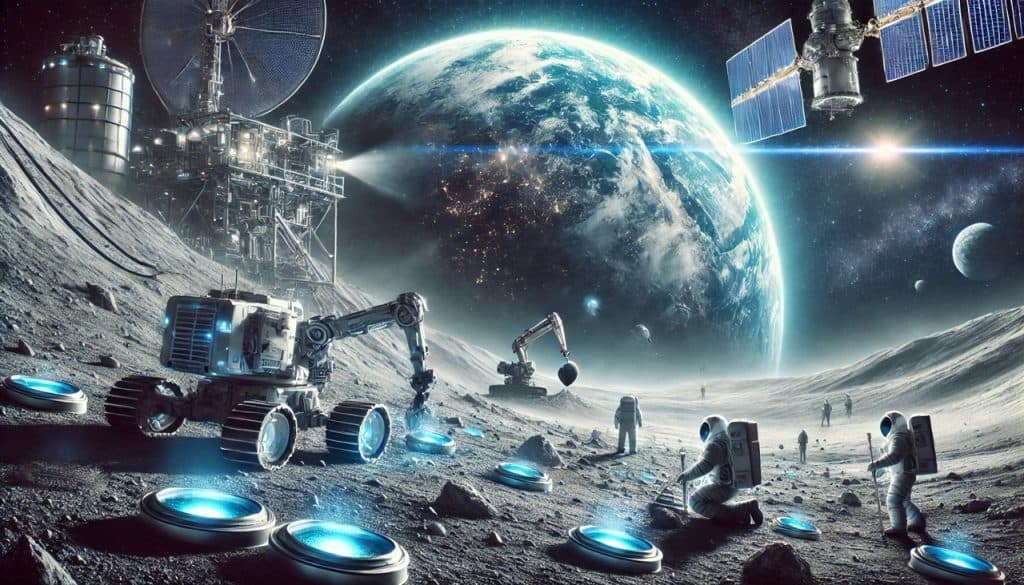
Helium-3 is a light, non-radioactive isotope of helium with two protons and one neutron. It is extremely rare on Earth, with most of it being a byproduct of tritium decay, which is used in nuclear weapons and reactors. The majority of helium-3 is believed to exist on the Moon, where it has been deposited by solar winds over billions of years (Wittenberg, 1986).
Potential Applications in Nuclear Fusion
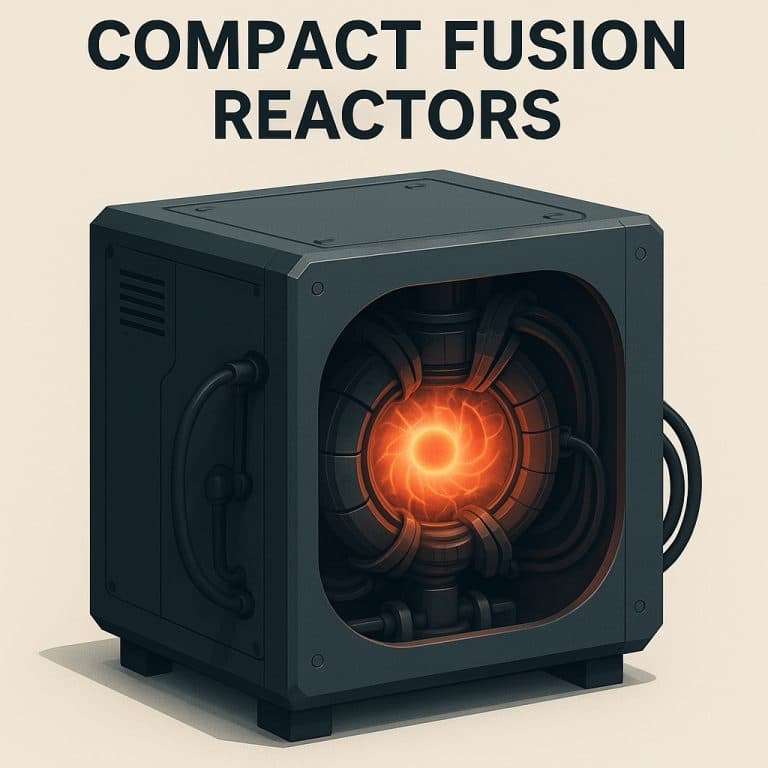
One of the most promising applications of helium-3 is in nuclear fusion. Fusion reactions involving helium-3 and deuterium (a heavy isotope of hydrogen) produce significantly less radioactive waste compared to traditional fusion reactions involving deuterium and tritium. This is because the primary byproducts of helium-3 fusion are protons and helium-4, both of which are non-radioactive (Kulcinski, 2000).
The reaction can be represented as follows:
He-3 + D → He-4 + p + 18.3 MeV
This reaction releases a substantial amount of energy, making it a potentially viable source of clean energy. Moreover, the absence of neutrons in the reaction reduces the risk of structural damage to the reactor and minimizes the production of radioactive waste (Santarius, 2006).
Challenges in Harnessing Helium-3
Despite its potential, there are several challenges associated with the use of helium-3 in nuclear fusion. Firstly, the extraction of helium-3 from the Moon is a technically and economically daunting task. Current estimates suggest that mining lunar regolith to extract helium-3 would require significant advancements in space technology and infrastructure (Schmitt, 2006).
Secondly, the development of practical fusion reactors that can efficiently utilize helium-3 is still in its infancy. While theoretical models and small-scale experiments have shown promise, achieving sustained and controlled fusion reactions remains a significant scientific and engineering challenge (Kulcinski, 2000).
Economic and Political Considerations
The economic viability of helium-3 as an energy source is another critical factor. The cost of mining and transporting helium-3 from the Moon to Earth is currently prohibitively high. However, as technology advances and the demand for clean energy increases, the economic landscape may shift in favor of helium-3 (Wittenberg, 1986).
Politically, the extraction of helium-3 from the Moon raises questions about space resource ownership and international cooperation. The Outer Space Treaty of 1967, which governs the activities of nations in space, does not explicitly address the issue of resource extraction. This has led to debates about the legal and ethical implications of mining celestial bodies (Schmitt, 2006).
Environmental Impact
One of the most compelling arguments for helium-3 fusion is its potential to provide a virtually limitless and clean energy source. Unlike fossil fuels, helium-3 fusion does not produce greenhouse gases or long-lived radioactive waste. This makes it an attractive option for addressing climate change and reducing our reliance on non-renewable energy sources (Santarius, 2006).
However, the environmental impact of mining helium-3 on the Moon must also be considered. While the Moon is not inhabited, large-scale mining operations could have unforeseen ecological consequences. It is essential to conduct thorough environmental assessments before embarking on such endeavors (Schmitt, 2006).
Conclusion
Helium-3 represents a tantalizing glimpse into the future of clean energy. Its potential applications in nuclear fusion offer a path toward sustainable and environmentally friendly energy production. However, significant scientific, economic, and political challenges must be overcome before helium-3 can become a practical energy source.
As research and technology continue to advance, the dream of harnessing helium-3 for clean energy may one day become a reality. Until then, it remains a symbol of humanity’s enduring quest for innovative solutions to our energy needs.
References
Kulcinski, G.L., 2000. Helium-3 fusion: A path to sustainable energy. Fusion Technology Institute, University of Wisconsin-Madison.
Santarius, J.F., 2006. Helium-3 and fusion power. Journal of Fusion Energy, 25(3-4), pp.185-191.
Schmitt, H.H., 2006. Mining the Moon: The helium-3 prospect. The Space Review.
Wittenberg, L.J., 1986. Lunar source of helium-3 for commercial fusion power. Fusion Technology, 10(2), pp.167-178.