The Revolutionary Future of Medicine: How AI and Biotech Are Transforming Healthcare
Artificial Intelligence(AI) and Biotechnology in Medicine
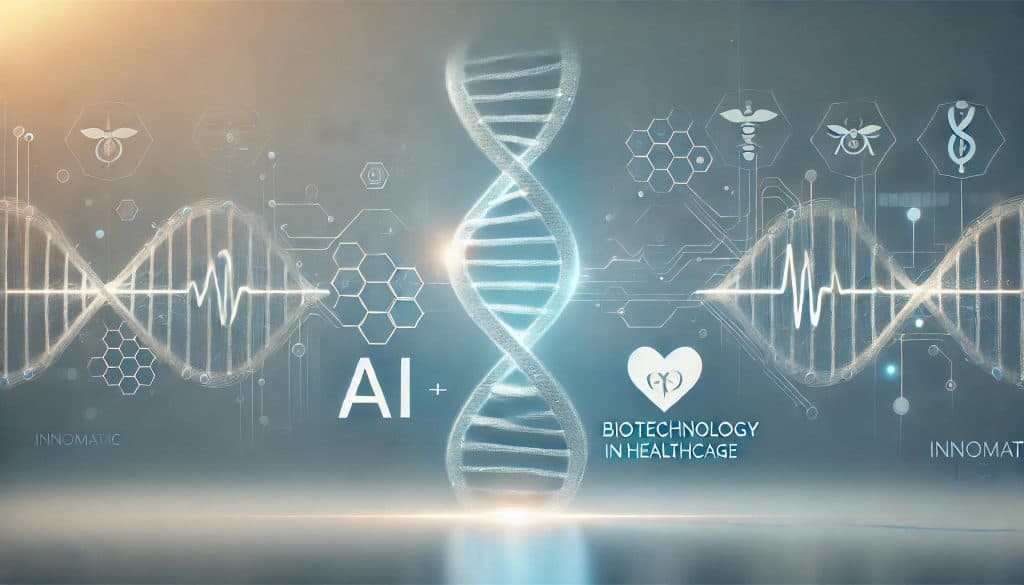
Artificial intelligence and biotechnology are transforming modern healthcare, driving innovations that enhance diagnostics, treatment precision, and patient outcomes. artificial intelligence refers to the simulation of human intelligence in machines that can think, learn, and adapt, while biotechnology leverages living organisms and biological systems to develop medical advancements.
The convergence of these technologies is enabling breakthroughs once considered impossible. artificial intelligence is improving the accuracy and efficiency of medical diagnostics, while biotechnology is paving the way for personalised treatments tailored to genetic profiles. This synergy is ushering in a new era of precision medicine, making healthcare more effective, less invasive, and more affordable.
Artificial intelligence in Diagnostics and Imaging
One of artificial intelligence’s most significant contributions to healthcare is in diagnostics. Machine learning algorithms can analyse medical images with remarkable accuracy, detecting early signs of diseases such as cancer, cardiovascular conditions, and neurological disorders through X-rays, MRIs, and CT scans.
Artificial intelligence in Cancer Detection
A study published in Nature Medicine demonstrated that an artificial intelligence(AI) system outperformed human radiologists in detecting breast cancer from mammograms. The algorithm reduced false positives by 5.7% and false negatives by 9.4%, highlighting its potential to improve diagnostic accuracy (Nature Medicine, 2020).
Advances in Personalised Medicine
Innovations in genetic research and biotechnology are driving personalised medicine, tailoring treatments based on genetic makeup, lifestyle, and environmental factors. Advances in genomics, proteomics, and bioinformatics allow for the identification of genetic mutations and biomarkers associated with specific diseases.
CRISPR and Gene Editing
One of the most groundbreaking advancements is CRISPR-Cas9, a gene-editing tool that allows scientists to modify DNA with unprecedented precision. This technology holds the potential to cure genetic disorders such as sickle cell anemia, cystic fibrosis, and even certain types of cancer (CRISPR Therapeutics, 2023).
Artificial intelligence-Driven Drug Discovery
Traditional drug discovery is time-consuming and costly, often taking over a decade and billions of dollars. artificial intelligence is streamlining this process by predicting how different compounds will interact with biological targets. Machine learning algorithms can analyse vast datasets to identify potential drug candidates, significantly reducing time and costs.
Artificial intelligence in COVID-19 Drug Discovery
During the COVID-19 pandemic, artificial intelligence identified existing drugs that could be repurposed to treat the virus. Benevolentartificial intelligence used its platform to suggest baricitinib, originally developed for rheumatoid arthritis, as a potential COVID-19 treatment. This discovery led to clinical trials and eventual regulatory approval (Benevolentartificial intelligence, 2021).
Robotics and artificial intelligence-Assisted Procedures
Surgical advancements have been enhanced through robotic systems, improving precision in minimally invasive procedures. artificial intelligence-driven systems assist surgeons in decision-making, reducing risks and improving patient outcomes.
Benefits of Robotic Surgery
- Precision: Robots perform intricate procedures with sub-millimeter accuracy.
- Minimally Invasive: Smaller incisions lead to faster recovery times and reduced scarring.
- Enhanced Visualisation: High-definition 3D imaging provides clearer views of surgical sites.
Wearable Devices and Remote Monitoring
Wearable health technology, such as smartwatches and fitness trackers, is advancing rapidly. These devices monitor vital signs, track physical activity, and detect early signs of health issues. Remote monitoring enables healthcare providers to track patients in real time, reducing the need for frequent hospital visits.
Apple Watch and Heart Health
The Apple Watch has been credited with saving lives by detecting irregular heart rhythms, such as atrial fibrillation, which can lead to stroke. Its ECG feature, combined with artificial intelligence-driven algorithms, provides users with actionable health insights (Apple, 2022).
Ethical and Regulatory Considerations
Despite the immense potential of these technologies, they raise ethical and regulatory concerns. Issues such as data privacy, algorithmic bias, and potential misuse of genetic information must be addressed to ensure responsible implementation.
Conclusion
The integration of these technologies is revolutionising healthcare, offering new hope for patients and medical professionals. From early disease detection to personalised treatments, these technologies are making medicine more precise, efficient, and accessible. However, addressing ethical and regulatory challenges is crucial to ensuring these advancements lead to an equitable and sustainable future.
References
- Nature Medicine. (2020). AI outperforms radiologists in mammography screening. https://www.nature.com/articles/s41591-019-0641-8
- BenevolentAI. (2021). AI-driven drug repurposing for COVID-19. https://www.benevolent.com/news-and-media/
- Apple. (2022). Apple Watch and heart health monitoring. https://med.stanford.edu/appleheartstudy.html
- CRISPR Therapeutics. (2023). Gene editing for genetic disorders. https://pmc.ncbi.nlm.nih.gov/articles/PMC4975809/