Asteroid Mining: The Next Frontier in Sustainable Resource Extraction
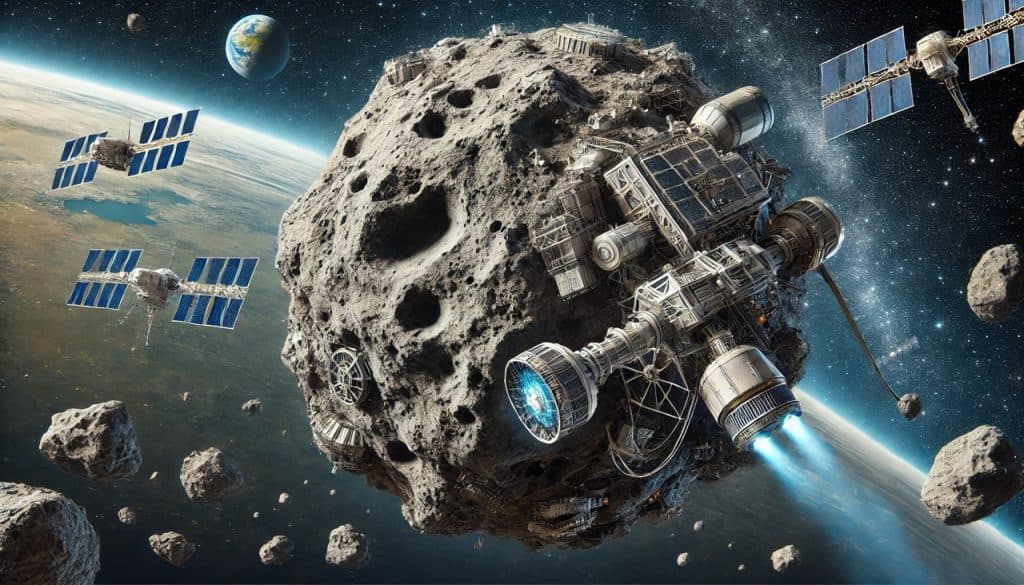
For centuries, humanity has looked to the stars for inspiration. Now, we’re beginning to look to space not only for answers but for resources. Asteroid mining—once a concept relegated to science fiction—is rapidly gaining traction as a viable solution to Earth’s growing material demands and sustainability challenges.
Why Asteroids?
Asteroids, particularly metallic ones, are rich in valuable resources such as platinum-group metals (PGMs), nickel, iron, cobalt, and even water ice. These materials are crucial in manufacturing high-tech electronics, electric vehicles, clean energy systems, and advanced alloys. With over a million known asteroids in our solar system—some within reachable distance from Earth—the potential is staggering.
According to NASA, even a small 500-meter asteroid could contain more platinum than has ever been mined in Earth’s history.
How Do We Know Asteroids Are Mineral Rich?
Our understanding of asteroid composition comes from several complementary sources:
- Meteorites: Many meteorites found on Earth are fragments of asteroids. Their composition—ranging from iron-nickel alloys to carbonaceous chondrites—provides direct clues about the materials asteroids contain.
- Spectroscopy: By analyzing the sunlight reflected off asteroids using ground-based telescopes and space observatories, scientists determine the minerals present on their surfaces.
- Space Missions: Probes like NASA’s OSIRIS-REx and Japan’s Hayabusa2 have returned data—and even physical samples—that confirm the presence of water, metals, and organics in near-Earth asteroids.
Together, these methods provide a strong scientific basis for the assumption that many asteroids are rich in commercially valuable resources.
What Technology Exists Today?
While commercial asteroid mining is still in its infancy, several critical technologies are already in development or deployment:
1. Spacecraft Propulsion and Navigation
Efficient propulsion and navigation systems are the backbone of any asteroid mining operation. Ion propulsion, exemplified by NASA’s Dawn spacecraft, uses electrically charged particles to create thrust. Although slow compared to chemical rockets, ion engines are incredibly fuel-efficient, allowing long-duration missions to the asteroid belt (Rayman et al., 2006). To maneuver through low-gravity environments and navigate complex orbital paths, autonomous navigation systems powered by artificial intelligence are essential. These systems use real-time data to make flight adjustments, avoid obstacles, and ensure precision landings on fast-moving targets (ESA, 2020).
2. Robotic Mining Platforms
The ability to land on and manipulate asteroid surfaces is already being demonstrated. Missions like JAXA’s Hayabusa2 and NASA’s OSIRIS-REx have showcased autonomous sample collection from asteroids Ryugu and Bennu, respectively. These missions utilized touch-and-go sampling mechanisms, high-resolution cameras, and terrain-relative navigation systems (Lauretta et al., 2017). Scaling this technology for commercial mining would require robotic platforms equipped with advanced drilling units, robotic arms for material handling, and LiDAR-based 3D mapping systems to survey and optimize resource extraction in microgravity conditions (Johnson et al., 2022).
3. In-Situ Resource Utilization (ISRU)
ISRU plays a crucial role in making space mining economically feasible by reducing the need to transport resources from Earth. For example, water ice extracted from asteroids can be split into hydrogen and oxygen for rocket fuel, supporting deep space missions. Metal ores like nickel and iron can be processed into structural materials for space infrastructure (Metzger et al., 2016). NASA’s upcoming Lunar ISRU Demonstration missions will further validate these concepts in the coming years, acting as a technological bridge to asteroid mining operations.
4. Materials Handling and Processing
Asteroid mining operations will need to handle fine regolith and volatile materials in zero gravity, posing unique challenges. Solutions being researched include magnetic separation, centrifugal sorting, and solar-powered sintering to melt and extract metals (Gertsch & Gertsch, 2005). Thermal extraction, using concentrated sunlight or microwaves, can vaporize specific materials for collection. Meanwhile, concepts for small-scale space-based refineries—such as the “optical mining” approach developed by TransAstra—are being tested to process asteroid material into fuel and industrial feedstock directly on-site (Sercel et al., 2016).
5. Satellite Communications and Data Analytics
Reliable, high-bandwidth communication is essential to operate mining missions remotely and analyze incoming sensor data. Satellite constellations in cislunar space could provide near-continuous connectivity to mining probes. Additionally, real-time telemetry can be processed using edge computing and onboard AI to monitor equipment health, optimize energy use, and adapt to evolving conditions (NASA Glenn Research Center, 2023). Integrating analytics platforms with mission control enables predictive maintenance, improved autonomy, and better decision-making across the entire mining lifecycle.
What Needs to Be Developed?
Despite progress, several gaps remain before asteroid mining becomes commercially viable:
Cost-efficient launch systems: While companies like SpaceX, with its Falcon Heavy, and Blue Origin’s upcoming New Glenn, have significantly reduced the cost per kilogram to orbit, launching the large payloads required for mining infrastructure remains a major expense. Heavy-lift capabilities, reusability, and in-orbit refueling systems are still in development, and mission economics will hinge on further decreasing launch costs to enable economically viable mining missions. Innovations such as SpaceX’s Starship and emerging small-lift, rapid-deploy systems may also play a role in modular mining architectures (Anderson et al., 2022).
Durable mining equipment: Mining hardware must endure harsh conditions unique to space. These include temperature fluctuations ranging from -200°C to +200°C, intense solar and cosmic radiation, and frequent exposure to micrometeoroid impacts. Materials like titanium alloys, carbon composites, and radiation-hardened electronics are being researched for use in mining bots and drills. Furthermore, dust mitigation technologies and self-healing materials may enhance the longevity and reliability of mining systems operating autonomously in remote locations (Richards & Smith, 2021).
Autonomous AI systems: Communication lags between Earth and asteroids—often up to 30 minutes round-trip—mean mining systems must make critical decisions in real-time without human intervention. Autonomous robotics integrated with AI can perform real-time environmental assessments, navigation, and adaptive learning in dynamic, unknown conditions. Ongoing advancements in reinforcement learning, edge computing, and robotic swarming are directly applicable to these challenges (Yoshida & Kubota, 2020).
Legal and regulatory frameworks: The legal status of space resources remains one of the most pressing issues. The 1967 Outer Space Treaty prohibits national appropriation of celestial bodies but does not clearly address private enterprise rights. Recent legislation in the U.S. (Commercial Space Launch Competitiveness Act of 2015) and Luxembourg (Space Resources Law of 2017) grants companies the right to extract and own space resources. However, an international consensus is still needed to prevent conflict and ensure equitable access. Ongoing discussions within the United Nations Committee on the Peaceful Uses of Outer Space (UNCOPUOS) aim to shape this emerging legal domain (Jakhu & Pelton, 2017).
Economics: Is It Worth It?
Asteroid mining presents both extraordinary potential and significant economic hurdles. Initially, the financial requirements are steep—developing spacecraft, mining platforms, and space-based infrastructure is capital-intensive. However, projections suggest long-term rewards could outweigh these costs. According to a Goldman Sachs report (2017), even a single 500-meter platinum-rich asteroid could be worth upwards of $50 billion in market value. These resources are essential for industries such as renewable energy, electronics, and aerospace, creating strong incentives for early investment.
Beyond raw resource value, asteroid mining could catalyze the development of an in-space economy. Infrastructure built to support mining—such as fuel depots, construction outposts, and processing stations—can serve broader commercial and scientific purposes. This ecosystem could dramatically reduce the cost of space exploration and enable permanent human presence beyond Earth.
Private companies such as Planetary Resources and Deep Space Industries, although facing funding challenges, have laid foundational work in this domain, and space agencies continue to partner with the private sector. Furthermore, increasing interest from venture capital and sovereign space programs could tip the balance toward commercial viability in the coming decades (BryceTech, 2021).
The rise of carbon taxes and ESG (Environmental, Social, and Governance) investing frameworks may further enhance the attractiveness of asteroid mining. Unlike terrestrial mining, which often entails deforestation, habitat destruction, and hazardous waste, asteroid mining—once operational—offers a relatively low-impact method to obtain critical materials, making it both an economically and environmentally strategic option.
In essence, while the up-front costs are high, the promise of access to near-infinite resources and reduced Earth impact positions asteroid mining as a high-risk, high-reward venture with enormous potential for transformative returns.
Environmental Benefits for Earth
One of the most compelling arguments in favor of asteroid mining is its potential to significantly reduce the environmental burden of terrestrial mining. The extraction of precious and rare-earth metals on Earth is often associated with severe ecological degradation. This includes deforestation, water contamination, biodiversity loss, and substantial greenhouse gas emissions due to energy-intensive mining operations. In contrast, extracting resources from asteroids could eliminate many of these impacts.
For example, rare metals such as platinum, cobalt, and rhodium are vital for electric vehicles, fuel cells, and renewable energy storage—but their terrestrial extraction often involves hazardous chemicals and conflict zones. Mining these elements in space would bypass many of the social and environmental issues associated with Earth-based operations.
Additionally, the water ice found in asteroids could be split into hydrogen and oxygen, supporting fuel production and even drinking water for space habitats. This reduces the need to launch these supplies from Earth, further decreasing the carbon footprint of future missions.
Asteroid mining also aligns with global efforts to decarbonize the economy and transition to circular, sustainable models of resource use. As space-based infrastructure and green technologies scale up, off-world mining could become a key enabler for sustainable development, helping to protect Earth’s ecosystems while still supporting technological advancement.
Looking ahead, asteroid mining represents not only a commercial opportunity but also a path toward a cleaner, more responsible future—both on our planet and beyond.
Conclusion
Asteroid mining is no longer the realm of pure science fiction. With advancing technologies in spacecraft propulsion, robotics, AI, and resource processing, the prospect of extracting valuable materials from celestial bodies is increasingly realistic. The economic potential is vast, offering access to resources that can fuel the next wave of innovation, from renewable energy to high-performance computing. At the same time, asteroid mining provides a strategic solution to the environmental and geopolitical issues plaguing traditional mining on Earth.
The journey toward asteroid mining will require unprecedented collaboration across scientific, industrial, and governmental sectors. It will demand new legal frameworks, investment in infrastructure, and the continued development of autonomous systems capable of operating in space’s harsh environment. But if achieved, it could redefine humanity’s relationship with the cosmos—and with our own planet.
As we enter this new frontier, InnomatInc remains committed to tracking the innovations and thought leadership shaping the future of space-based resource extraction. Follow us for updates on the technologies and policies driving asteroid mining from concept to reality.
References
- Anderson, M., et al. (2022). “Economics of Heavy-Lift Launch for Off-Earth Mining.” New Space Journal, 10(2), 87-101.
- BryceTech (2021). Start-Up Space: Update on Investment in Commercial Space Ventures. [online] Available at: https://brycetech.com
- ESA (2020). Artificial Intelligence and Autonomy in Space Exploration. [online] Available at: https://www.esa.int
- Gertsch, L. and Gertsch, R. (2005). “Mineral Processing in Space: Concepts and Approaches.” Proceedings of the Space Resources Roundtable, Colorado School of Mines.
- Goldman Sachs (2017). Space: Investment Frontier. [internal report].
- Jakhu, R., & Pelton, J. (2017). Global Space Governance: An International Study. Springer.
- Johnson, D. et al. (2022). “Autonomous Resource Extraction Systems for Small-Body Exploration.” IEEE Aerospace Conference, 1-10.
- Lauretta, D. S., et al. (2017). “OSIRIS-REx: Sample Return from Asteroid Bennu.” Space Science Reviews, 212(1–2), 925–984.
- Metzger, P.T., et al. (2016). “Space Resources and ISRU: Status and Opportunities.” NASA Technical Reports.
- NASA Glenn Research Center (2023). Advancing AI for Space Systems Monitoring. [online] Available at: https://www.nasa.gov
- Rayman, M.D., et al. (2006). “Dawn: A Mission in Development for Exploration of Main Belt Asteroids Vesta and Ceres.” Acta Astronautica, 58(11), 605–616.
- Richards, H. & Smith, K. (2021). “Advanced Materials for Deep Space Robotic Mining.” Journal of Spacecraft Engineering, 18(3), 201–217.
- Sercel, J.C., et al. (2016). “Optical Mining of Asteroids, Moons, and Planets to Enable Sustainable Human Exploration and Space Industrialization.” AIAA SPACE Forum.
- Yoshida, K. & Kubota, T. (2020). “AI-Based Control for Space Robotic Systems.” Robotics and AI in Space, Springer.
Stay ahead of the next industrial revolution—subscribe to our newsletter for deep dives into the emerging space economy, advanced materials, and the innovations shaping tomorrow.