AI in 2025: The Biggest Innovations We’ll See
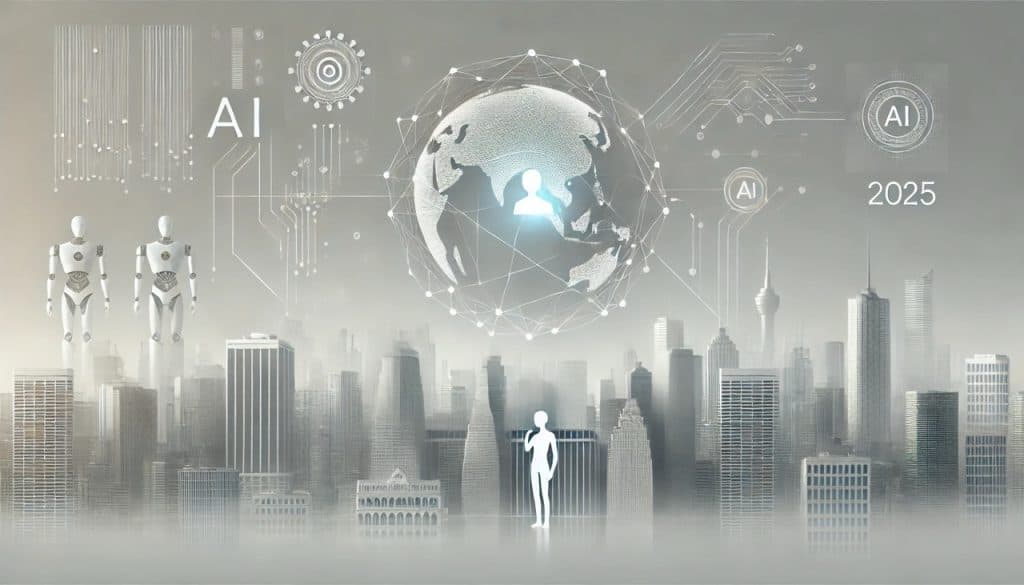
Artificial intelligence (AI) 2025 has been one of the most transformative technologies of the 21st century, and its evolution shows no signs of slowing down. By 2025, AI is expected to revolutionize industries, reshape economies, and redefine how we interact with technology. From healthcare to transportation, education to entertainment, the innovations driven by AI will touch nearly every aspect of our lives. In this blog, we’ll explore the most significant AI advancements we can expect by 2025, backed by research and expert predictions.
1. AI-Powered Personalised Medicine
One of the most promising areas of AI innovation is healthcare, particularly in personalized medicine. By 2025, AI is expected to enable highly tailored treatment plans for patients based on their genetic makeup, lifestyle, and medical history. Machine learning algorithms will analyze vast datasets, including genomic information, to predict disease risks and recommend preventive measures.
For instance, companies like DeepMind and IBM Watson Health are already leveraging AI to improve diagnostics and treatment plans. By 2025, these systems will become even more sophisticated, enabling doctors to prescribe medications and therapies with unprecedented precision. According to a report by Accenture, AI applications in healthcare could save the U.S. healthcare economy $150 billion annually by 2026, with personalized medicine playing a significant role (Accenture, 2021).
2. Autonomous Vehicles Become Mainstream
Self-driving cars have been in development for years, but by 2025, they are expected to become a common sight on roads. Companies like Tesla, Waymo, and Cruise are leading the charge in autonomous vehicle technology, and advancements in AI will make these vehicles safer, more reliable, and more affordable.
AI-powered systems will enable cars to navigate complex urban environments, communicate with other vehicles, and adapt to real-time traffic conditions. According to a report by McKinsey, fully autonomous vehicles could account for up to 15% of passenger vehicles sold globally by 2030, with significant progress being made by 2025 (McKinsey & Company, 2020). This shift will not only reduce accidents caused by human error but also transform transportation logistics and urban planning.
3. AI-Driven Climate Change Solutions
Climate change is one of the most pressing challenges of our time, and AI will play a crucial role in addressing it by 2025. AI algorithms will be used to optimize energy consumption, predict natural disasters, and develop sustainable solutions. For example, Google’s DeepMind has already used AI to reduce energy consumption in its data centres by 30%, showcasing the potential for similar applications on a larger scale (DeepMind, 2020).
By 2025, AI will enable smarter grids, more efficient renewable energy systems, and better monitoring of deforestation and carbon emissions. According to a report by PwC, AI could contribute up to $5.2 trillion to the global economy by 2030 while reducing greenhouse gas emissions by 4% (PwC, 2021). These innovations will be critical in achieving global climate goals.
4. Natural Language Processing (NLP) Reaches Human-Level Understanding
Natural Language Processing (NLP) has made significant strides in recent years, with models like OpenAI’s GPT-4 and Google’s BERT enabling more human-like interactions with machines. By 2025, NLP is expected to reach near-human levels of understanding, enabling seamless communication between humans and AI systems.
This advancement will revolutionize industries like customer service, education, and content creation. For example, AI-powered virtual assistants will be able to handle complex queries, provide personalized recommendations, and even generate high-quality written content. According to Gartner, by 2025, 50% of knowledge workers will use AI-driven virtual assistants daily, up from just 2% in 2019 (Gartner, 2020).
5. AI in Education: Personalised Learning for All
Education is another sector poised for transformation by AI. By 2025, AI-powered platforms will provide personalized learning experiences tailored to each student’s strengths, weaknesses, and learning style. These systems will use data analytics to identify gaps in knowledge and adapt content in real-time, ensuring that students receive the support they need.
Companies like Khan Academy and Duolingo are already using AI to enhance learning experiences. By 2025, these platforms will become even more advanced, offering immersive learning environments powered by AI and augmented reality (AR). According to a report by HolonIQ, global EdTech investments are expected to reach $404 billion by 2025, with AI playing a central role in driving innovation (HolonIQ, 2021).
6. AI in Creative Industries
AI is no longer limited to analytical tasks; it is increasingly being used in creative fields like art, music, and filmmaking. By 2025, AI tools will enable artists to push the boundaries of creativity, generating everything from music compositions to visual art and even screenplays.
For example, OpenAI’s DALL-E and GPT-4 have already demonstrated the potential of AI in creative tasks. By 2025, these tools will become more accessible, allowing creators to experiment with new forms of expression. According to a report by Deloitte, AI-generated content could account for 20% of all business content by 2025, highlighting the growing influence of AI in creative industries (Deloitte, 2021).
7. AI-Powered Cybersecurity
As cyber threats become more sophisticated, AI will play a critical role in safeguarding digital assets. By 2025, AI-driven cybersecurity systems will be able to detect and respond to threats in real-time, minimizing the risk of data breaches and cyberattacks.
AI algorithms will analyze network traffic, identify anomalies, and predict potential vulnerabilities before they can be exploited. According to a report by Capgemini, 61% of organizations say they cannot detect breach attempts without AI, and 69% plan to invest in AI-driven cybersecurity solutions by 2025 (Capgemini, 2020). These advancements will be essential in protecting sensitive data and ensuring the integrity of digital systems.
8. AI in Agriculture: Feeding a Growing Population
With the global population expected to reach 8 billion by 2025, AI will play a crucial role in ensuring food security. AI-powered systems will optimize crop yields, monitor soil health, and predict weather patterns, enabling farmers to make data-driven decisions.
For example, companies like John Deere are already using AI to develop autonomous tractors and precision farming tools. By 2025, these technologies will become more widespread, helping farmers increase productivity while reducing environmental impact. According to a report by MarketsandMarkets, the AI in agriculture market is expected to grow from $1 billion in 2020 to $4 billion by 2026, with significant advancements being made by 2025 (MarketsandMarkets, 2021).
9. AI and the Future of Work
AI will continue to transform the workplace by 2025, automating repetitive tasks and enabling employees to focus on higher-value activities. While concerns about job displacement persist, AI is also expected to create new opportunities and roles.
According to the World Economic Forum, AI and automation could displace 85 million jobs by 2025 but create 97 million new roles in fields like AI development, data analysis, and cybersecurity (World Economic Forum, 2020). To prepare for this shift, businesses and governments will need to invest in reskilling and upskilling programs.
10. Ethical AI and Regulation
As AI becomes more pervasive, ensuring its ethical use will be a top priority. By 2025, we can expect stricter regulations and guidelines governing AI development and deployment. Governments and organizations will focus on addressing issues like bias, transparency, and accountability in AI systems.
For example, the European Union’s proposed AI Act aims to establish a regulatory framework for AI, ensuring that it is used responsibly and ethically (European Commission, 2021). By 2025, similar regulations will likely be adopted globally, shaping the future of AI innovation.
Conclusion
The next few years will be a transformative period for AI, with groundbreaking innovations set to reshape industries and improve our quality of life. From personalized medicine to autonomous vehicles, AI-driven climate solutions to ethical regulations, the advancements we’ll see by 2025 will lay the foundation for a smarter, more connected world. However, as we embrace these innovations, it’s crucial to address the ethical and societal challenges they present, ensuring that AI benefits everyone.
References
- Accenture. (2021). Artificial Intelligence: Healthcare’s New Nervous System. Retrieved from https://www.accenture.com
- McKinsey & Company. (2020). The Future of Mobility Is at Our Doorstep. Retrieved from https://www.mckinsey.com
- DeepMind. (2020). Using AI to Reduce Energy Consumption in Data Centers. Retrieved from https://deepmind.com
- PwC. (2021). How AI Can Enable a Sustainable Future. Retrieved from https://www.pwc.com
- Gartner. (2020). The Future of Work: AI and Virtual Assistants. Retrieved from https://www.gartner.com
- HolonIQ. (2021). Global EdTech Market Report. Retrieved from https://www.holoniq.com
- Deloitte. (2021). AI in Creative Industries: The Next Frontier. Retrieved from https://www2.deloitte.com
- Capgemini. (2020). Reinventing Cybersecurity with Artificial Intelligence. Retrieved from https://www.capgemini.com
- MarketsandMarkets. (2021). AI in Agriculture Market Report. Retrieved from https://www.marketsandmarkets.com
- World Economic Forum. (2020). The Future of Jobs Report. Retrieved from https://www.weforum.org
- European Commission. (2021). Proposal for a Regulation on Artificial Intelligence. Retrieved from https://ec.europa.eu