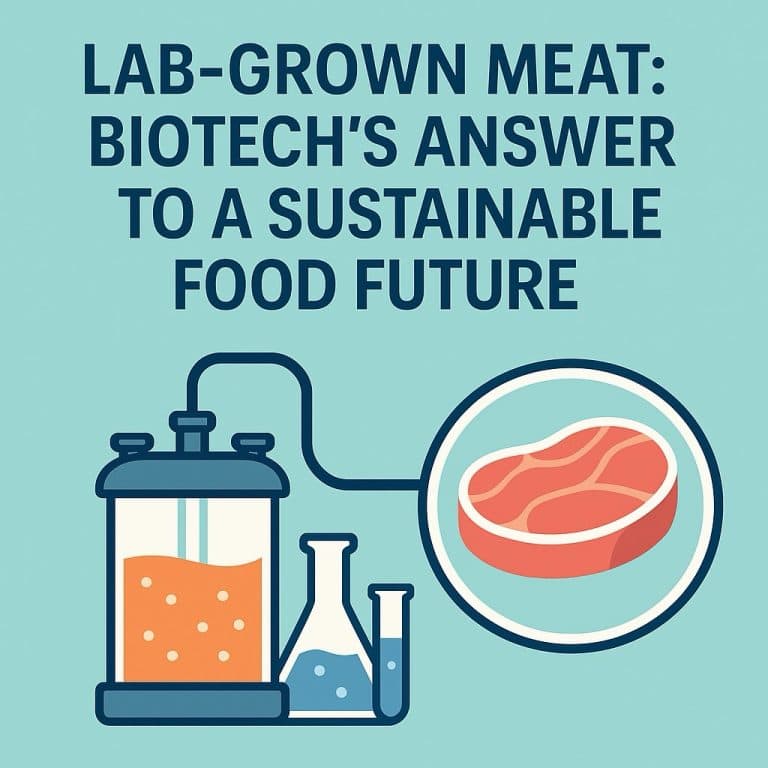
Lab-Grown Meat: Biotech’s Answer to a Sustainable Food Future
The global food system is undergoing a radical transformation. At the centre of this disruption lies lab-grown meat, a product of cellular agriculture poised to reshape not just what we eat but how we think about food, sustainability, and biotechnology. For a world grappling with population growth, climate change, and ethical concerns over animal farming, cultured meat offers an alternative that could redefine the protein landscape.
What is Lab-Grown Meat?
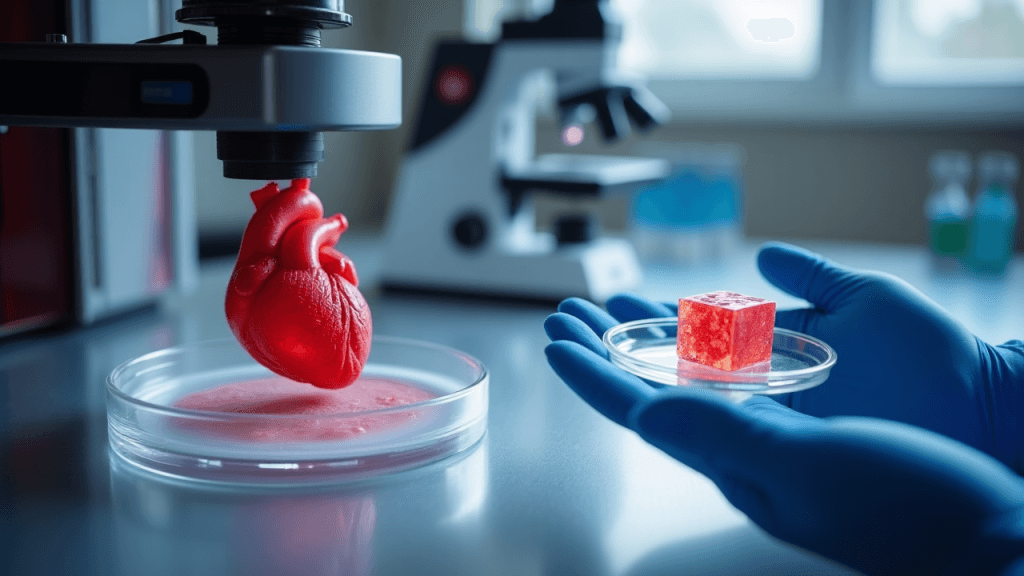
Lab-grown meat, also referred to as cultured meat or cell-based meat, is produced by cultivating animal cells directly in a controlled environment—bypassing the need to raise and slaughter animals. The process typically involves extracting a small sample of muscle cells from a live animal and then feeding those cells with nutrients, amino acids, and growth factors to stimulate their development into muscle tissue. The result? Real meat, but without the farm.
This is not a meat substitute like plant-based products (e.g. soy or pea protein). Lab-grown meat is meat, created using tissue engineering techniques first honed in biomedical research.
Why It Matters: The Current Food System is Unsustainable
The conventional livestock industry is a major contributor to greenhouse gas emissions, land degradation, and water use. According to the Food and Agriculture Organization (FAO), livestock is responsible for about 14.5% of global greenhouse gas emissions—more than all the world’s cars, planes, trains, and ships combined.
Lab-grown meat, if widely adopted, could significantly reduce these impacts:
- Climate: Studies suggest lab-grown meat could reduce greenhouse gas emissions by up to 96% compared to traditional beef production (Tuomisto & Teixeira de Mattos, 2011).
- Land and Water Use: It uses up to 99% less land and 96% less water.
- Biodiversity: Less demand for grazing land helps preserve forests and natural habitats.
- Animal Welfare: It offers an ethical alternative by removing the need for animal slaughter.
The Science Behind Cultured Meat
Cultured meat production involves several key steps:
- Cell Isolation: Scientists take a biopsy from a healthy animal, often a few grams of muscle tissue.
- Cell Cultivation: The isolated cells are placed in a bioreactor, a device that mimics the animal’s body by maintaining optimal temperature, pH, and oxygen levels.
- Scaffolding and Structuring: To create texture, cells grow on edible scaffolds made of materials like collagen or plant proteins.
- Harvesting and Processing: Once the tissue matures, it is harvested and processed into meat products—such as burgers, sausages, or even steak.
As the technology advances, companies are working on producing more structured cuts of meat, like chicken breasts or marbled steak, with realistic taste and mouthfeel.
Industry Leaders and Breakthroughs
The lab-grown meat industry has witnessed exponential growth in the past five years. More than 150 companies are now active in this space globally. Key players include:
- UPSIDE Foods (USA) – The first to gain regulatory approval from the FDA and USDA to sell cultivated chicken in the United States in 2023.
- Eat Just (USA/Singapore) – The first to commercially sell lab-grown meat in Singapore, starting with cultivated chicken nuggets.
- Vow (Australia) – An innovative startup creating exotic cultured meats like kangaroo and quail.
- Aleph Farms (Israel) – Specialising in structured steaks and working on zero-gravity meat cultivation for space missions.
Venture capitalists have invested over USD $2.8 billion in the cultivated meat sector since 2016, and government interest is rising. Singapore became the first nation to approve lab-grown meat for commercial sale in 2020. Meanwhile, the US and EU are developing regulatory frameworks to follow suit.
Challenges to Overcome
Despite its promise, lab-grown meat still faces considerable hurdles:
- Cost: Although costs have fallen dramatically (from $330,000 per burger in 2013 to under $10 in 2023), it still needs to reach price parity with traditional meat.
- Scaling Up: Bioreactors capable of producing thousands of kilograms of meat are still in early development.
- Public Perception: Consumer acceptance varies. Concerns range from safety and ‘naturalness’ to taste and cultural factors.
- Regulatory Approval: Every new product must undergo safety assessments and navigate complex regulations which differ by country.
Sustainability & Climate Impact
Cultured meat’s environmental benefits are clear in theory, but how sustainable it truly is depends on how it’s scaled. If powered by renewable energy and produced efficiently, lab-grown meat could drastically reduce food-related emissions.
However, a 2023 study published in Nature Food notes that if fossil fuels are used to power energy-intensive production processes, cultured meat could be no better—or even worse—than traditional beef in terms of emissions (Lynch & Pierrehumbert, 2023). That’s why integration with green energy and sustainable inputs will be critical to realising its potential.
Future Outlook: Towards the Mainstream
Lab-grown meat represents more than just a technological curiosity—it is a fundamental shift in how we produce protein. The convergence of synthetic biology, clean energy, and sustainable food policy is laying the groundwork for a new food paradigm.
Here’s what we can expect by 2030:
- Mainstream Availability: Cultured meat is projected to make up 10% of global meat consumption by 2035 (BCG, 2021).
- Product Variety: Beyond burgers, we’ll see sushi-grade tuna, foie gras, lamb chops, and even hybrid products (meat blended with plant protein).
- Personalised Nutrition: Advances in nutrigenomics may allow for lab-grown meat tailored to individual health profiles.
- Space and Disaster Resilience: Cultured meat could play a vital role in feeding astronauts or communities affected by climate disasters and food insecurity.
Australia’s Role in the Cultured Meat Revolution
Australia’s agricultural and scientific heritage positions it as a leader in food innovation. Startups like Vow and Magic Valley are pioneering cultured meat development domestically, supported by research from CSIRO and universities like UNSW and Monash.
With its reputation for clean, safe food and proximity to the growing Asian market, Australia could become a global hub for exporting cultivated meat technology and products.
Conclusion: Rethinking Meat for a Sustainable Future
Lab-grown meat exemplifies the intersection of science, ethics, and sustainability. As this technology matures, it has the power to reshape food systems, reduce environmental strain, and meet the nutritional needs of a growing population—without the ethical compromises of conventional farming.
For Innomat Inc.’s audience of innovators and futurists, lab-grown meat is more than just a food innovation—it’s a glimpse into how science can solve global challenges through bold, transformative thinking.
References
- Tuomisto, H. L., & Teixeira de Mattos, M. J. (2011). Environmental impacts of cultured meat production. Environmental Science & Technology, 45(14), 6117-6123.
- Lynch, J., & Pierrehumbert, R. (2023). Climate impacts of cultured meat under energy-use scenarios. Nature Food, 4(2), 152–158.
- BCG. (2021). Food for Thought: The Protein Transformation. Boston Consulting Group.
- Good Food Institute. (2024). State of the Industry Report – Cultivated Meat.
- Food and Agriculture Organization of the United Nations (FAO). (2020). Tackling Climate Change Through Livestock.