Quantum Computing: The Future of Technology and How It Will Transform Our Lives
In the realm of cutting-edge technology, few fields hold as much promise—and mystery—as quantum computing. While classical computers have driven the digital revolution over the past century, quantum computing represents a paradigm shift that could redefine how we solve problems, process information, and interact with the world. But what exactly is quantum computing, how will it change our lives, and what are the latest advancements in this groundbreaking field? Let’s dive in.
What is Quantum Computing?
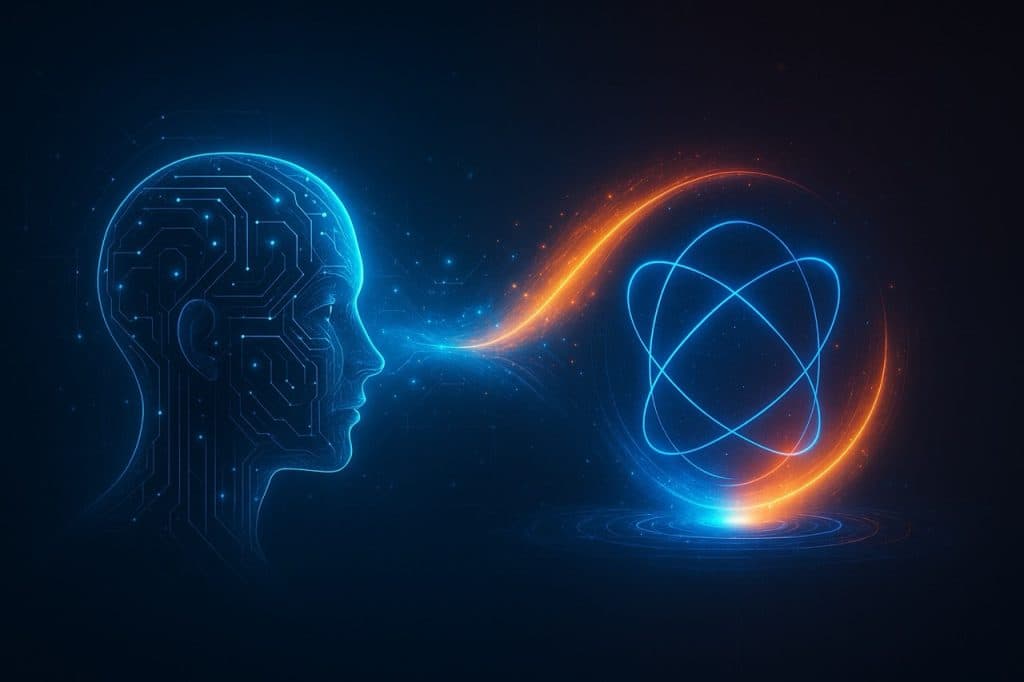
Quantum computing is a type of computing that leverages the principles of quantum mechanics to perform calculations far beyond the capabilities of classical computers. Unlike classical computers, which use bits (0s and 1s) as the smallest unit of information, quantum computers use quantum bits, or qubits. Qubits can exist in a superposition of states, meaning they can be both 0 and 1 simultaneously. This property, along with entanglement and quantum interference, allows quantum computers to process vast amounts of data in parallel.
- Superposition: A qubit can exist in multiple states at once, enabling quantum computers to explore many possible solutions simultaneously.
- Entanglement: Qubits can be entangled, meaning the state of one qubit is directly related to the state of another, even if they are physically separated. This allows for faster and more efficient information processing.
- Quantum Interference: Quantum algorithms use interference to amplify correct solutions and cancel out incorrect ones, making problem-solving more efficient.
These principles give quantum computers their extraordinary computational power, particularly for solving complex problems that are intractable for classical systems.
How Quantum Computing Will Change Our Lives
Quantum computing has the potential to revolutionize industries, solve global challenges, and transform everyday life. Here are some key areas where its impact will be felt:
1. Healthcare and Drug Discovery
Quantum computers can simulate molecular and chemical interactions at an unprecedented scale, accelerating drug discovery and personalized medicine. For example, they could help design new drugs for diseases like Alzheimer’s or cancer by modeling complex biological systems that are beyond the reach of classical computers.
2. Artificial Intelligence and Machine Learning
Quantum computing can enhance AI algorithms by processing large datasets more efficiently. This could lead to breakthroughs in natural language processing, image recognition, and predictive analytics, enabling smarter and more intuitive technologies.
3. Cryptography and Cybersecurity
Quantum computers pose a threat to classical encryption methods, such as RSA, by cracking them in seconds using algorithms like Shor’s algorithm. However, they also offer solutions through quantum cryptography, which uses the principles of quantum mechanics to create virtually unbreakable encryption.
4. Climate Modeling and Environmental Science
Quantum computers can analyze complex climate systems and optimize renewable energy solutions. For instance, they could improve battery technology, optimize energy grids, and model the impact of climate change with greater accuracy.
5. Finance and Optimization
In finance, quantum computing can optimize portfolios, manage risk, and detect fraud more effectively. It can also solve complex optimization problems in logistics, supply chain management, and transportation, leading to cost savings and increased efficiency.
6. Material Science
Quantum simulations can help design new materials with unique properties, such as superconductors or lightweight alloys, which could revolutionize industries like aerospace, electronics, and construction.
Latest Advancements in Quantum Computing
The field of quantum computing is advancing rapidly, with breakthroughs occurring at an accelerating pace. Here are some of the most significant recent developments:
1. Quantum Supremacy Achievements
In 2019, Google claimed to have achieved quantum supremacy with its Sycamore processor, which performed a specific calculation in 200 seconds that would take the world’s fastest supercomputer 10,000 years. While this milestone was debated, it marked a turning point in the field.
2. Error Correction and Stability
One of the biggest challenges in quantum computing is decoherence, where qubits lose their quantum state due to environmental interference. Recent advancements in error correction techniques, such as surface codes and topological qubits, are improving the stability and reliability of quantum systems.
3. Quantum Hardware Innovations
Companies like IBM, Intel, and Rigetti are developing more powerful quantum processors with increasing numbers of qubits. IBM’s Eagle processor, unveiled in 2021, boasts 127 qubits, while startups like IonQ are exploring trapped-ion technology for more stable qubits.
4. Quantum Networking
Researchers are making strides in quantum communication, which uses entangled particles to transmit information securely. In 2022, China demonstrated a quantum communication network spanning over 4,600 kilometers, paving the way for a future quantum internet.
5. Hybrid Quantum-Classical Systems
To bridge the gap between current technology and fully functional quantum computers, researchers are developing hybrid systems that combine classical and quantum computing. These systems are already being used for practical applications in chemistry, optimization, and machine learning.
6. Government and Private Sector Investment
Governments and corporations are investing heavily in quantum research. The U.S. National Quantum Initiative, the EU’s Quantum Flagship, and China’s quantum research programs are driving innovation. Companies like Google, Microsoft, and Amazon are also racing to develop scalable quantum technologies.
Challenges and the Road Ahead
Despite its immense potential, quantum computing faces significant challenges. Building scalable, error-free quantum systems remains a daunting task, and practical applications are still in their infancy. Additionally, the field requires interdisciplinary collaboration between physicists, computer scientists, and engineers to overcome technical hurdles.
However, the progress made so far is undeniable. As quantum computing matures, it will likely complement classical computing rather than replace it, solving specific problems that are currently unsolvable.
Conclusion
Quantum computing is no longer the stuff of science fiction—it’s a rapidly evolving reality that promises to transform our world. From revolutionizing healthcare and AI to addressing climate change and advancing material science, its potential applications are vast and profound. While challenges remain, the latest advancements demonstrate that we are on the cusp of a quantum revolution.
As we stand at the brink of this new era, one thing is clear: quantum computing will not just change how we compute—it will change how we live. The question is no longer if quantum computing will impact our lives, but when and how. The future is quantum, and it’s closer than we think.
References:
- Arute, F., et al. (2019). “Quantum supremacy using a programmable superconducting processor.” Nature, 574(7779), 505-510.
- IBM Quantum. (2021). “IBM Unveils Breakthrough 127-Qubit Quantum Processor.” https://www.ibm.com/quantum-computing/
- National Quantum Initiative Act. (2018). https://www.quantum.gov/
- Chinese Quantum Communication Network. (2022). Nature, 606(7912), 41-45.
- Preskill, J. (2018). “Quantum Computing in the NISQ era and beyond.” Quantum, 2, 79.